
Quality Cedar Shingle Siding | Siding Replacement Lewiston
Cedar shingle siding gives a house the classic Maine shingled wall, and across the Lewiston-Auburn area we lay it one course at a time over a wall that is flashed and able to drain. It averages about $2,000 per square, and we write that number down for you before a single piece of the old wall is pried loose.
- (207) 515-8586
- 217 Main St, 2nd Floor, Lewiston
- [email protected]
- Siding only, start to finish
- Free estimate requests
- 22 towns around Lewiston-Auburn
- Shingles laid course by course
- Stainless nails, never electrogalvanized
- A finish plan written for every wall
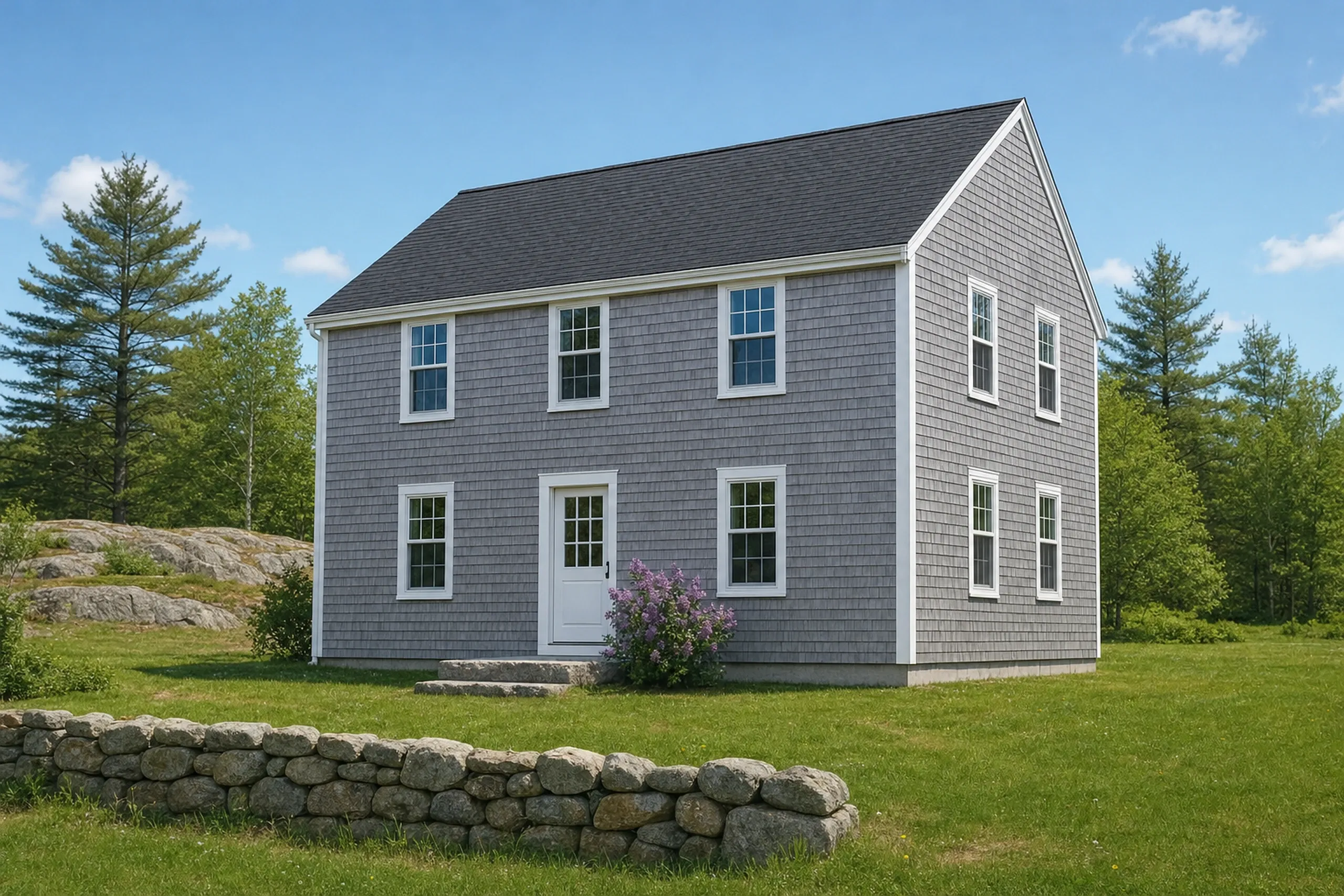
This page covers cedar shingle siding on houses in the Lewiston-Auburn area: stripping or covering the old wall, adding a weather barrier and flashing, then laying western red or eastern white cedar shingles course by course, left natural or stained.
Shingles last when the wall behind them can dry, so we nail with stainless steel, double the first course at the foundation, and build a vented rain screen wherever foam insulation goes on.
On price, cedar sits at the top of the four sidings we hang, averaging about $2,000 per square, meaning each 100 square feet of wall, across many quotes.
Why Do Cedar Shingles Still Suit a Maine House?
Cedar shingles still suit a Maine house because they are the wall many capes, farmhouses and lake camps here were designed around.
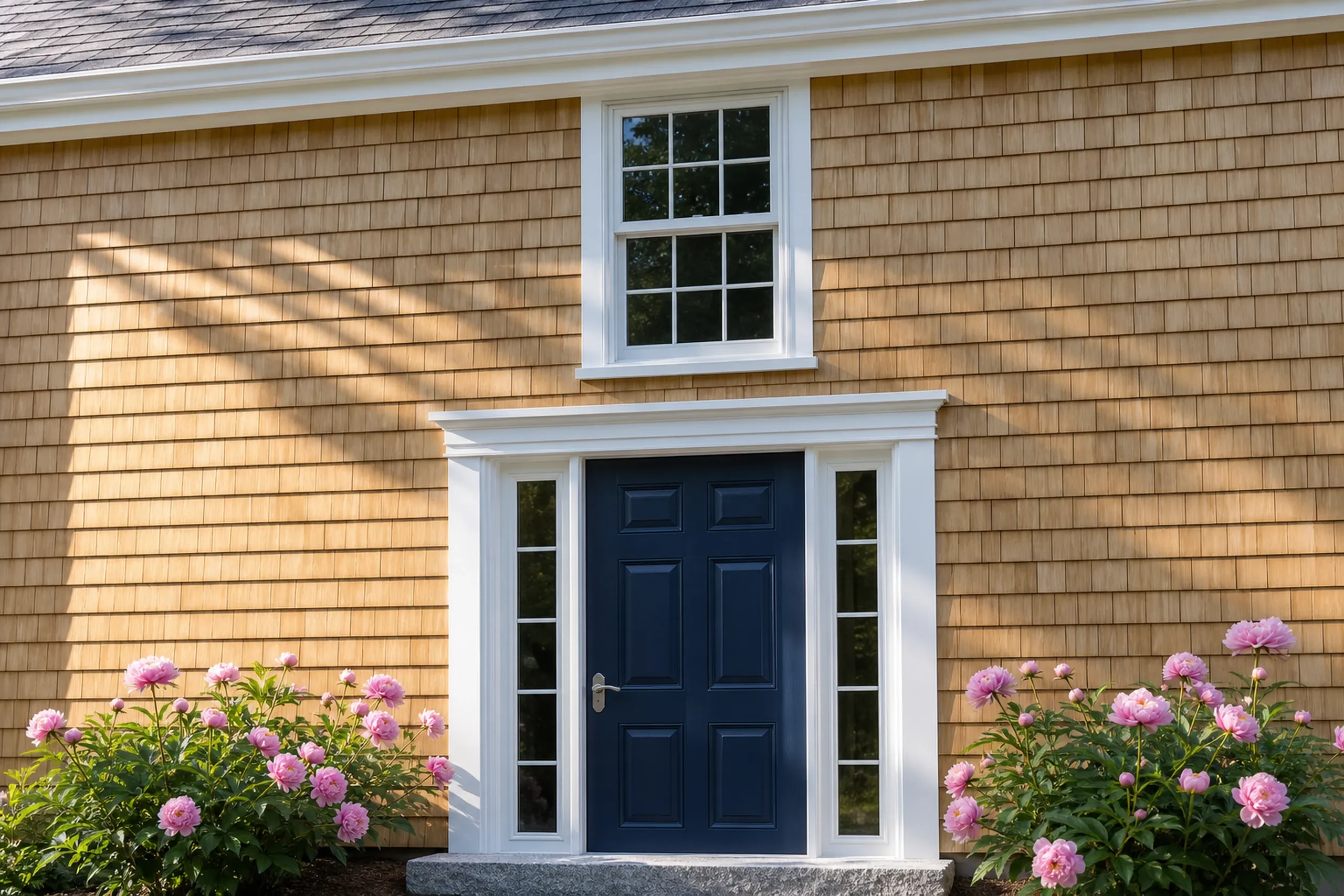
- Left natural, cedar weathers to silver-gray; a bleaching oil speeds that, and stain or paint gives a color instead
- Eastern white cedar grows in Maine and is approved for sidewalls, and western red cedar grades up to clear, edge-grain heartwood
- One split or soft shingle comes out and a new one slips in, so a bad patch seldom means a new wall
What Else Might a Shingled Wall Need?
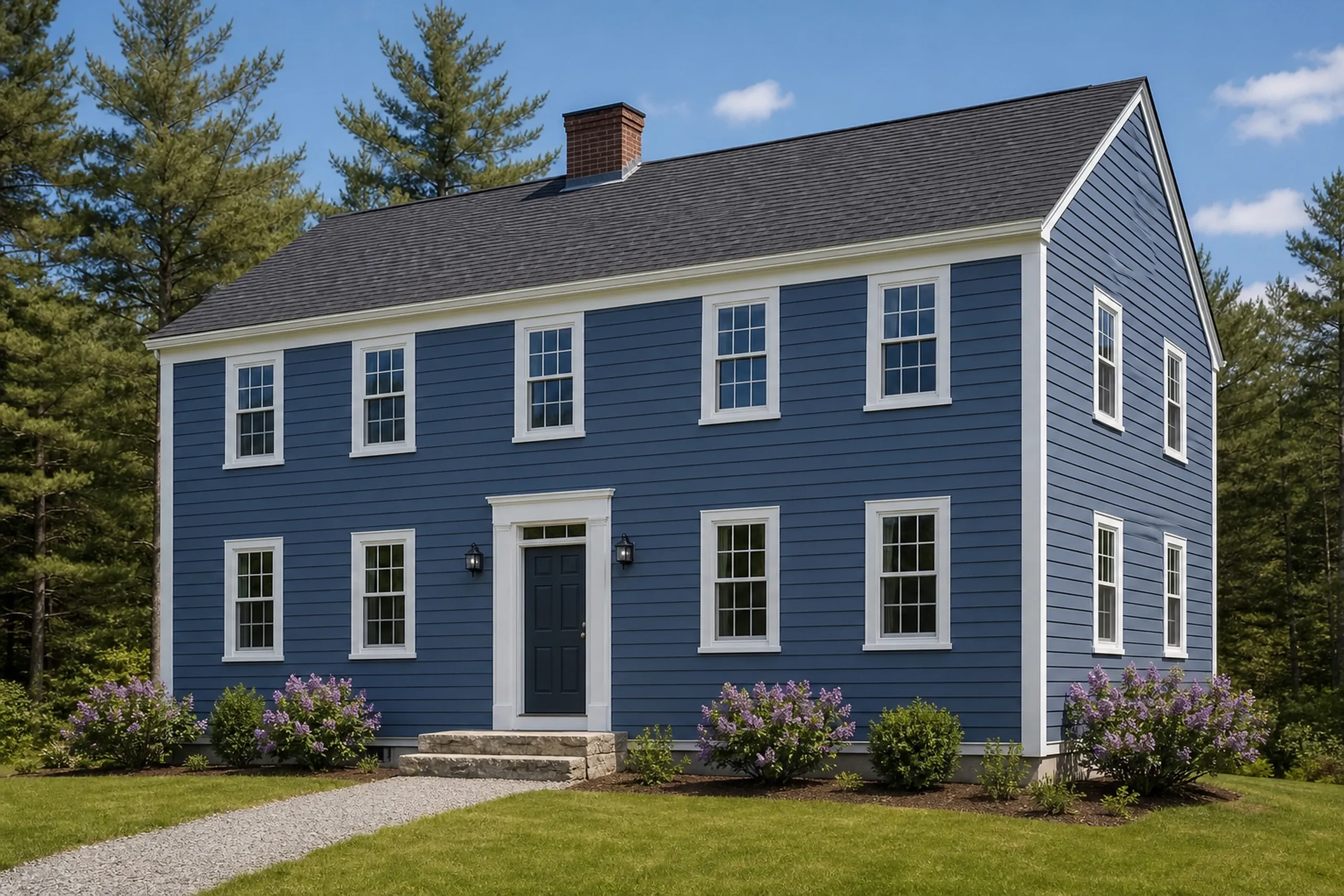
Which Towns Get Our Cedar Shingle Work?
- AuburnME1 mi from Lewiston
- MinotME5 mi from Lewiston
- SabattusME5 mi from Lewiston
- GreeneME7 mi from Lewiston
- Mechanic FallsME9 mi from Lewiston
- PolandME9 mi from Lewiston
- WalesME9 mi from Lewiston
- DurhamME10 mi from Lewiston
- New GloucesterME10 mi from Lewiston
- LisbonME10 mi from Lewiston
- TurnerME11 mi from Lewiston
- HebronME12 mi from Lewiston
- BowdoinME13 mi from Lewiston
- MonmouthME13 mi from Lewiston
- LitchfieldME14 mi from Lewiston
- OxfordME14 mi from Lewiston
- PownalME14 mi from Lewiston
- LeedsME15 mi from Lewiston
- BuckfieldME15 mi from Lewiston
- OtisfieldME16 mi from Lewiston
- CascoME17 mi from Lewiston
What Goes Into a Cedar Shingle Wall That Lasts?
A cedar shingle wall that lasts starts with three decisions made before the first nail: grade, the wall behind the shingles, and how cedar compares.
Grades, Species and How Cedar Ages
Grade matters more than species. The Cedar Shake and Shingle Bureau's top western red cedar grade, Blue Label, is clear heartwood and all edge grain, and the USDA Forest Products Laboratory says edge-grain shingles warp and split less, while heartwood resists decay better than sapwood.
Eastern white cedar is the Maine-grown shingle, though the laboratory notes its quality is not certified by third-party inspection. We pick the grade wall by wall, saving the clearest edge-grain shingles for the faces that take driven rain.
Weathering cedar also grows some mildew and algae, which the laboratory calls normal and only cosmetic. An oxygen-bleach cleaner and a garden hose aimed downward clear them, while a pressure washer tears out wood fiber and cuts years off the shingles.
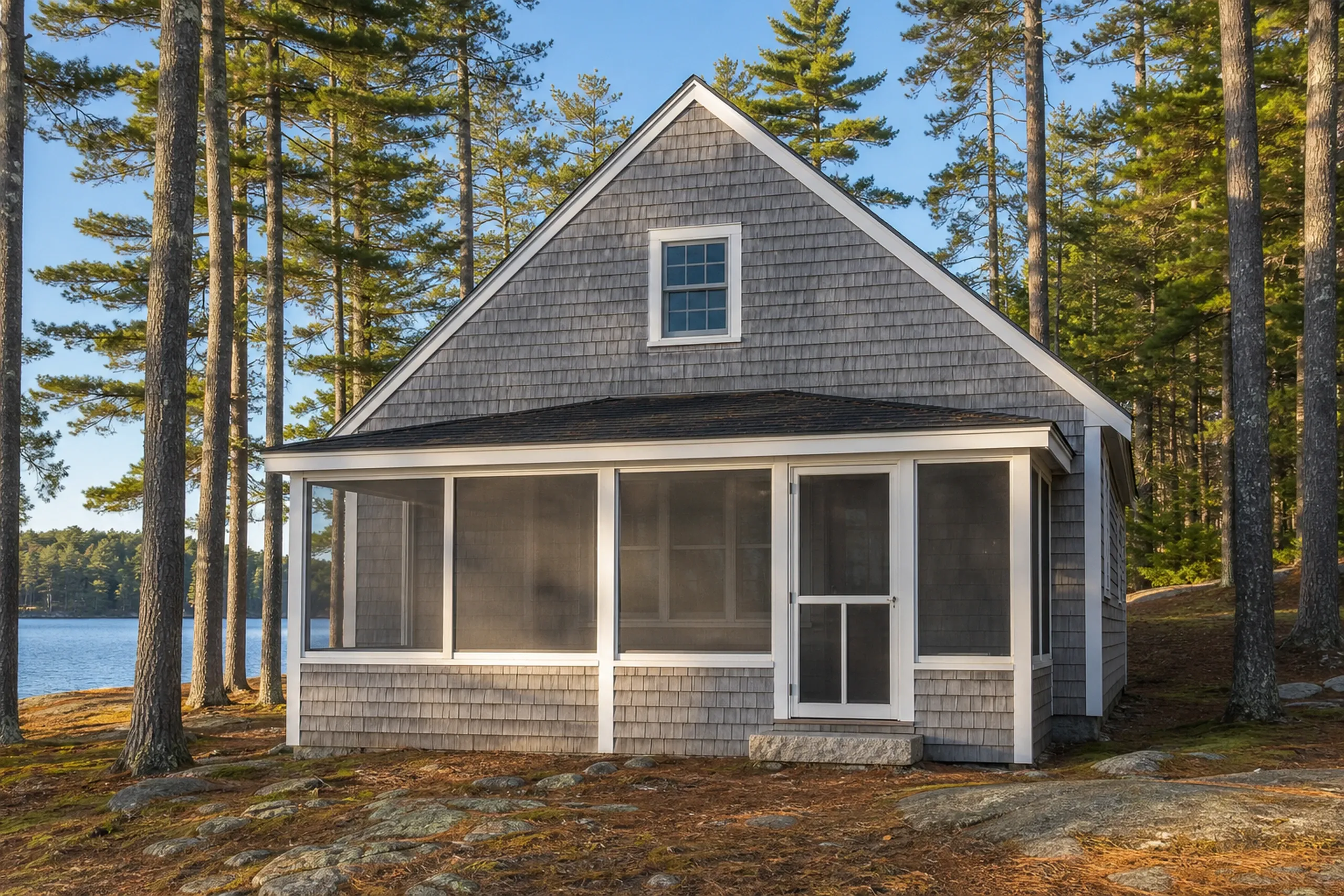
Rain Screens, Coursing and Nails for a Dry Wall
Shingles shed most rain, but the wall behind them still has to drain and dry. A new weather barrier laps over flashed windows and doors, and on walls with little roof overhang or full exposure to wind-blown rain, the Forest Products Laboratory says finishing shingles before they go up helps most.
Adding foam insulation while the wall is open changes the job, because the laboratory's guidance requires a rain screen over foam sheathing: horizontal strips spaced to the exposure over vertical furring, vented top and bottom.
Coursing follows the Cedar Shake and Shingle Bureau: a doubled first course at the foundation, joints staggered 1 1/2 inches or more from the joints below, and top-grade western red cedar spaced 1/8 to 1/4 inch apart. Eastern white cedar makers set 16-inch shingles at a 5-inch exposure to keep them from buckling.
We nail with stainless steel, which the bureau rates highest for corrosion resistance, and never with electrogalvanized nails, which it says corrode and stain. Corners are woven or boxed with boards, and a kick-out flashing sends roof water into the gutter where a roof meets the wall.
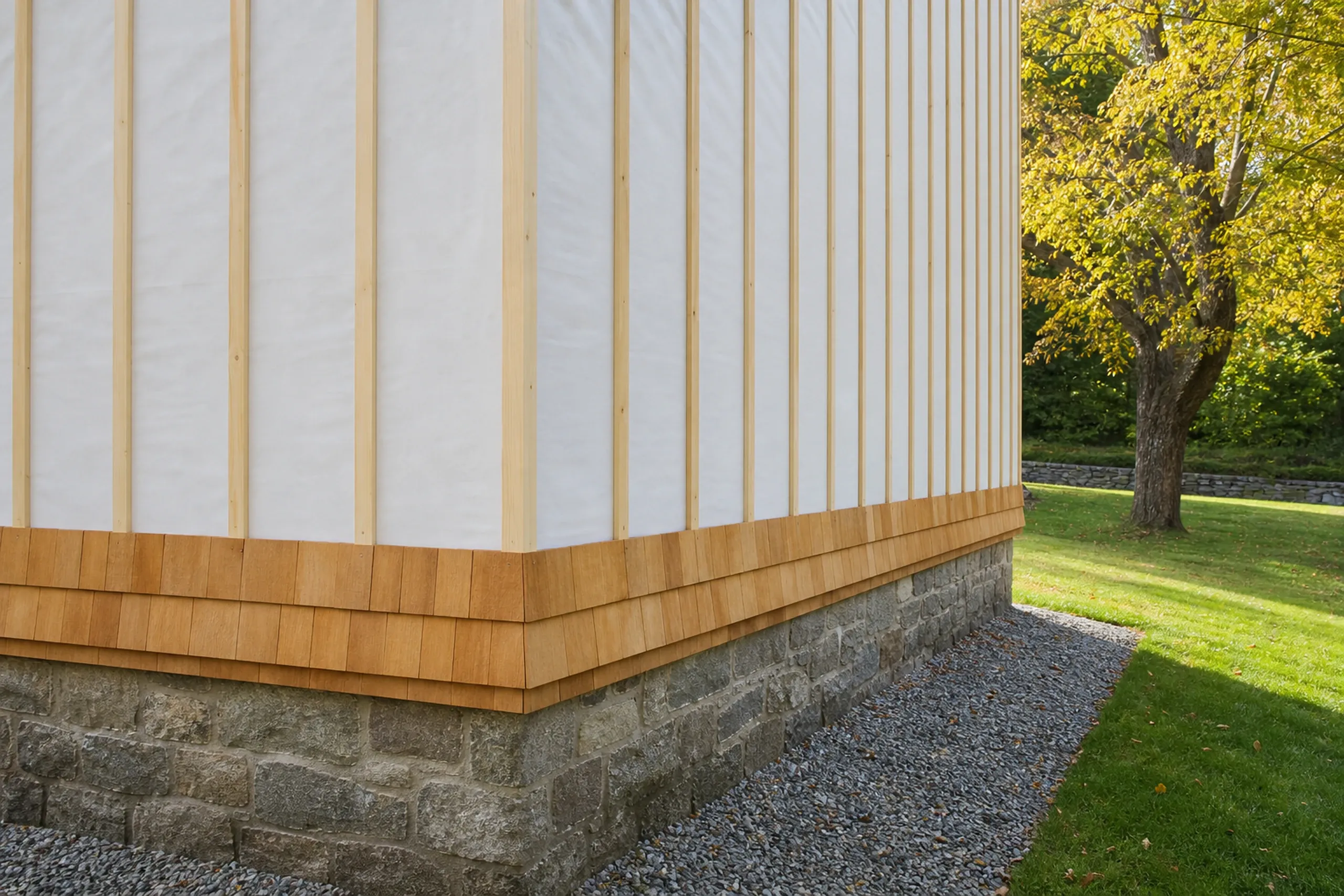
Cedar, Hardie or LP: Which Wall Fits the House?
Cedar averages about $2,000 per square here, against $1,300 to $1,600 for Hardie fiber cement and $1,200 to $1,500 for LP SmartSide. Vinyl, the lowest of the four, runs $800 to $1,000.
We recommend cedar for capes, farmhouses and lake camps that were shingled from the start, and for owners who like a wall that grays and changes. Choose Hardie or LP if you want a crisp painted lap face in one steady color, or if the budget sits nearer their numbers.
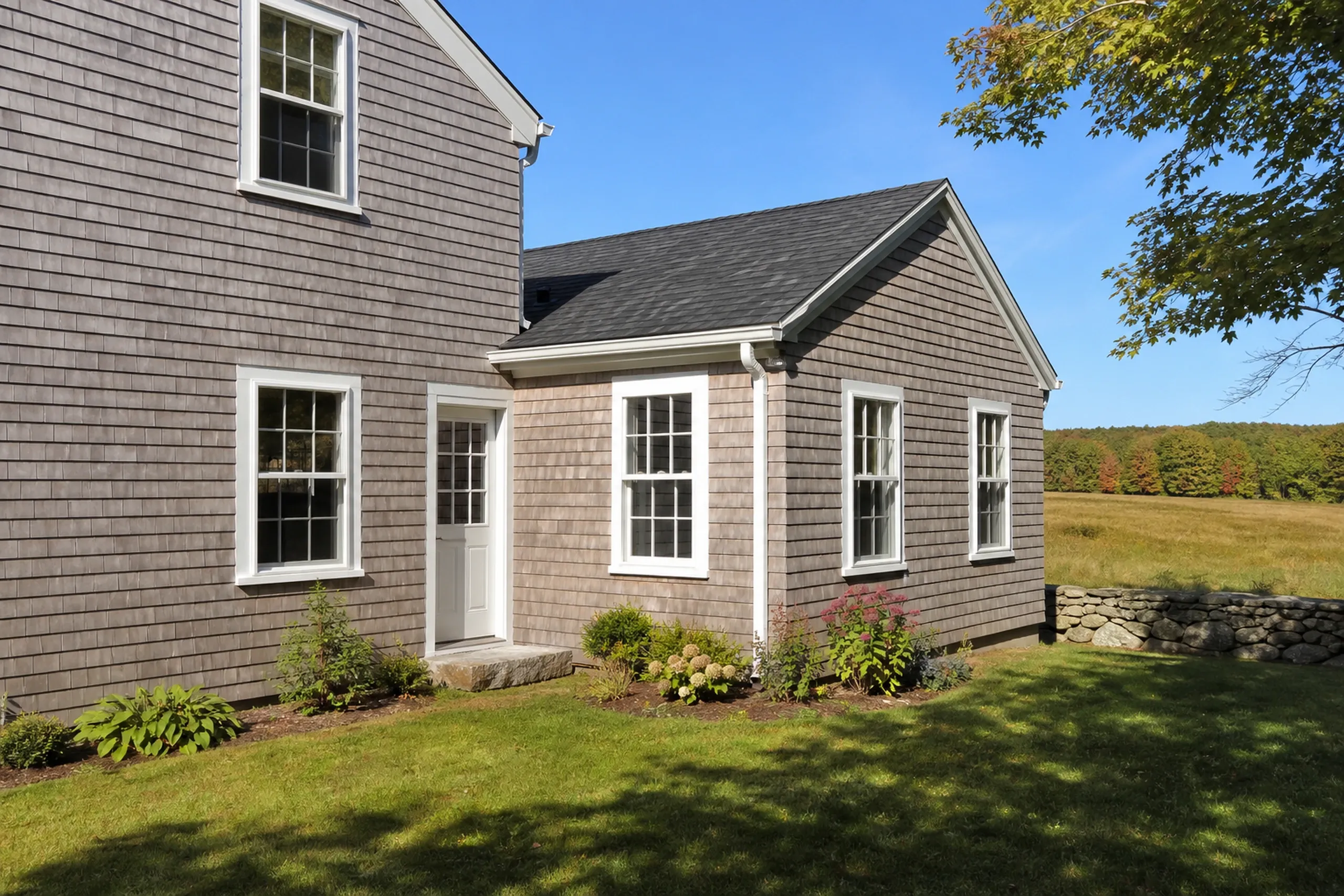
What Cedar Shingle Services Do We Offer?
Our cedar work starts at the sheathing and ends with whatever finish you choose.
On a house built before 1978, tearing off or sanding old painted siding falls under the EPA lead renovation rule, and the tear-off is planned around it. We also check with the town building and fire officials, since the Forest Products Laboratory notes some areas require fire-treated shingles on siding.
- Old siding or worn shingles torn off and hauled away, sheathing repaired, then a new weather barrier with flashed openings and roof-to-wall joints
- Western red or eastern white cedar left raw, stained at the factory or primed, with woven corners or corner boards and a vented rain screen where needed
- Single-shingle replacement on a sound older wall, plus restaining or repainting of an existing cedar wall
How Do We Run a Cedar Shingle Job?
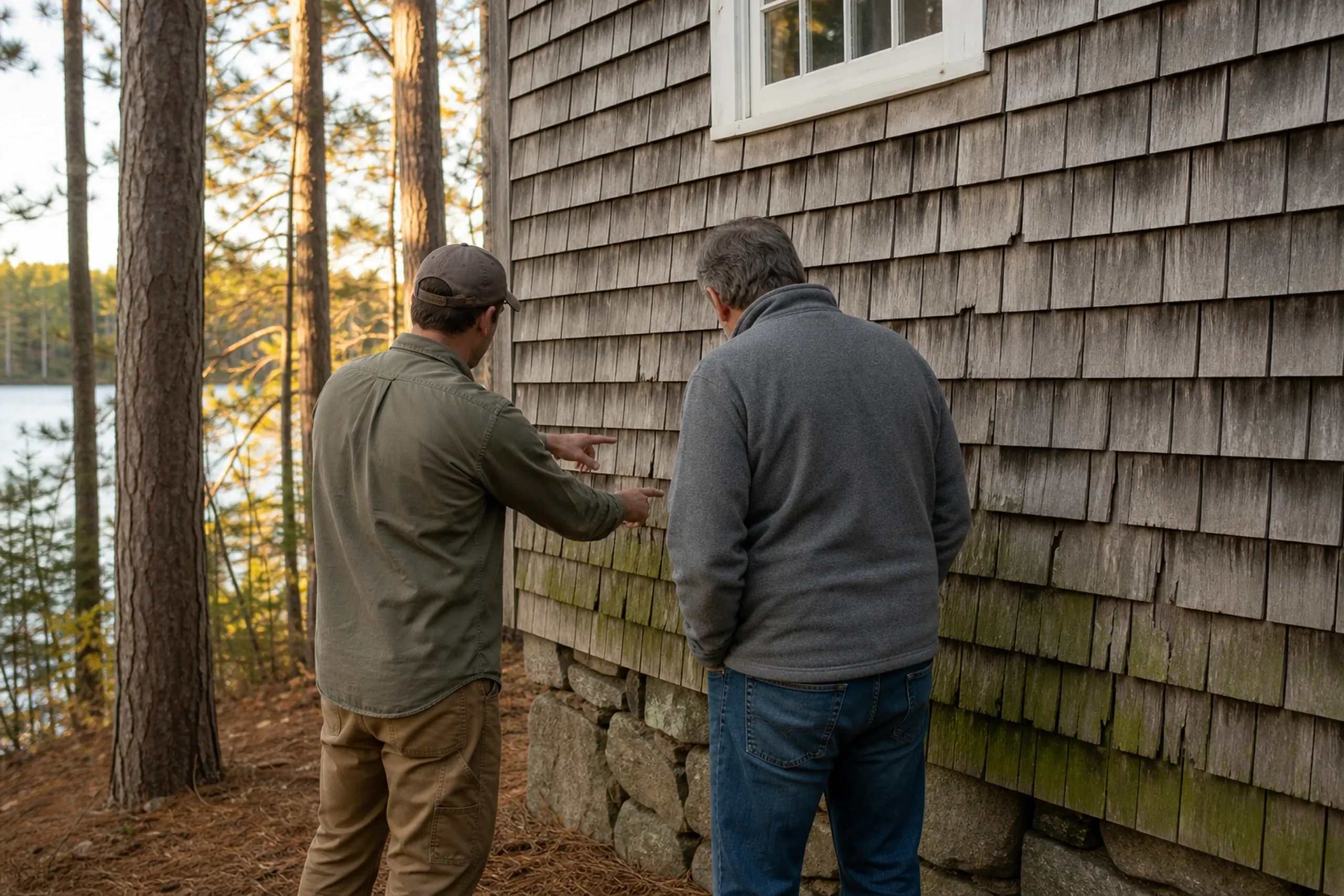
We study each wall before any price.
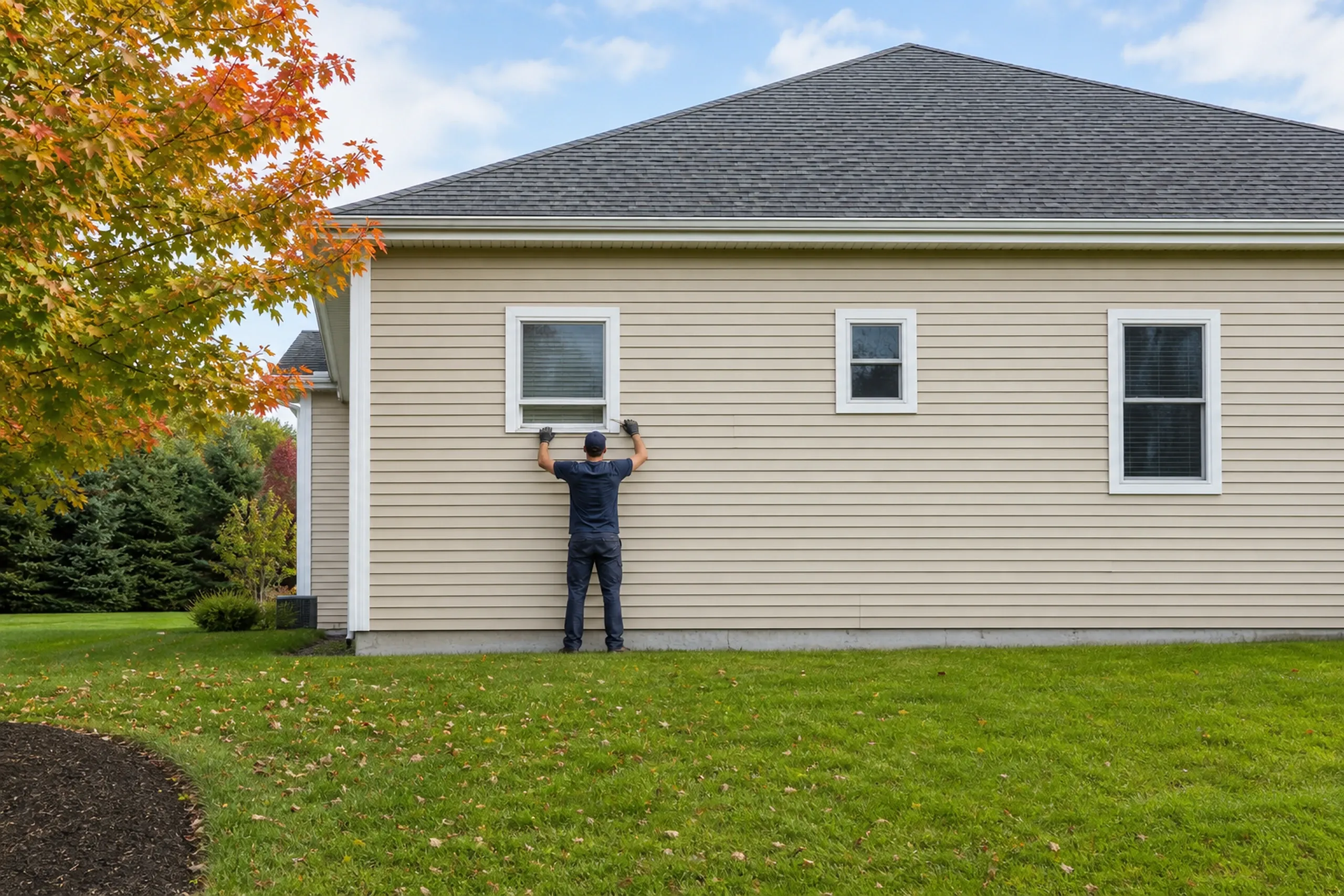
We press on the sills and corners, look under the old siding where you allow it, and note which walls take sun, shade or driven rain.
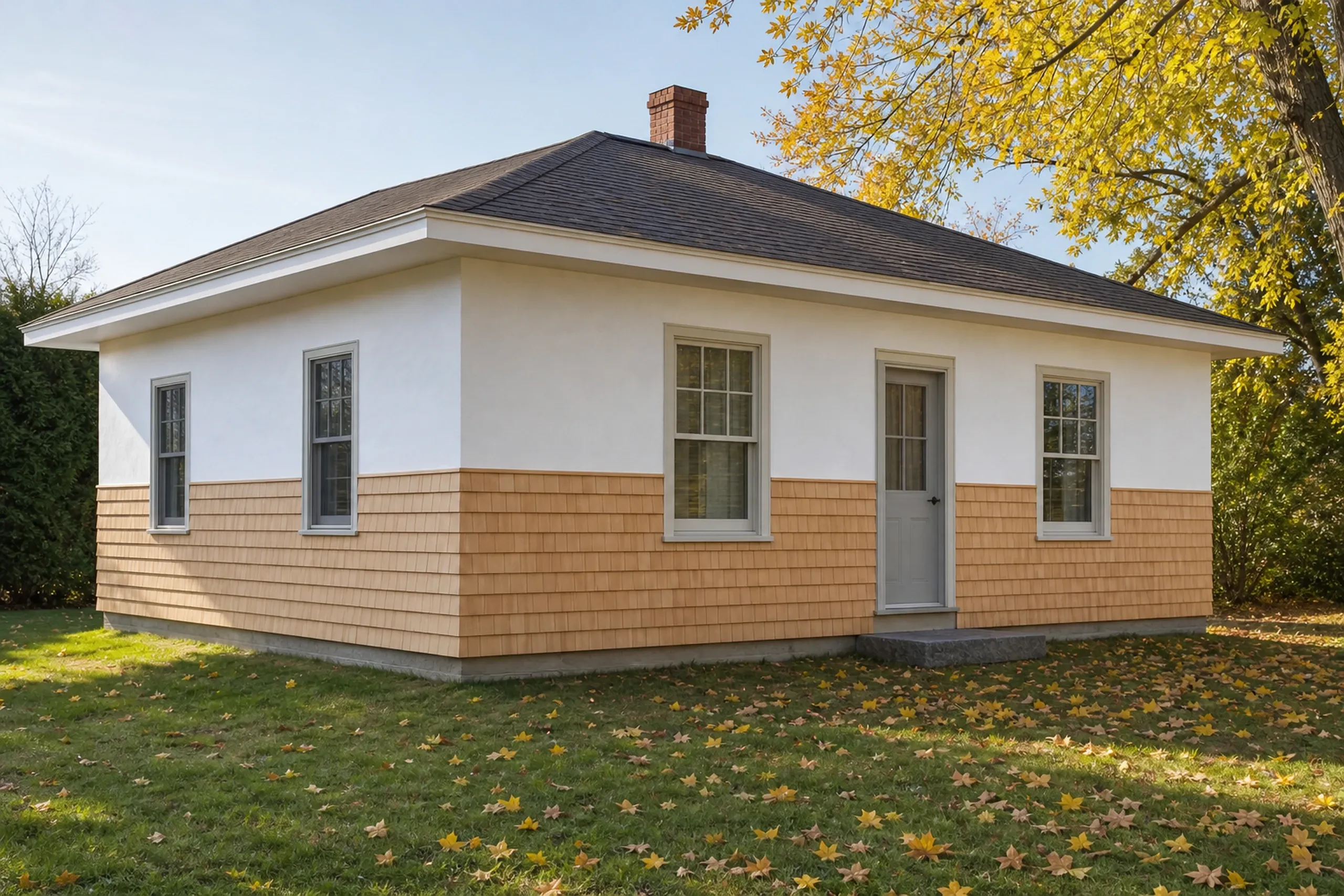
Grade, finish and price go in writing.
The written price spells out species and grade, exposure, nail type and the finish, and under Maine's 10 MRSA §1487 a home job over $3,000 needs a signed written contract and caps the down payment at a third of the price.
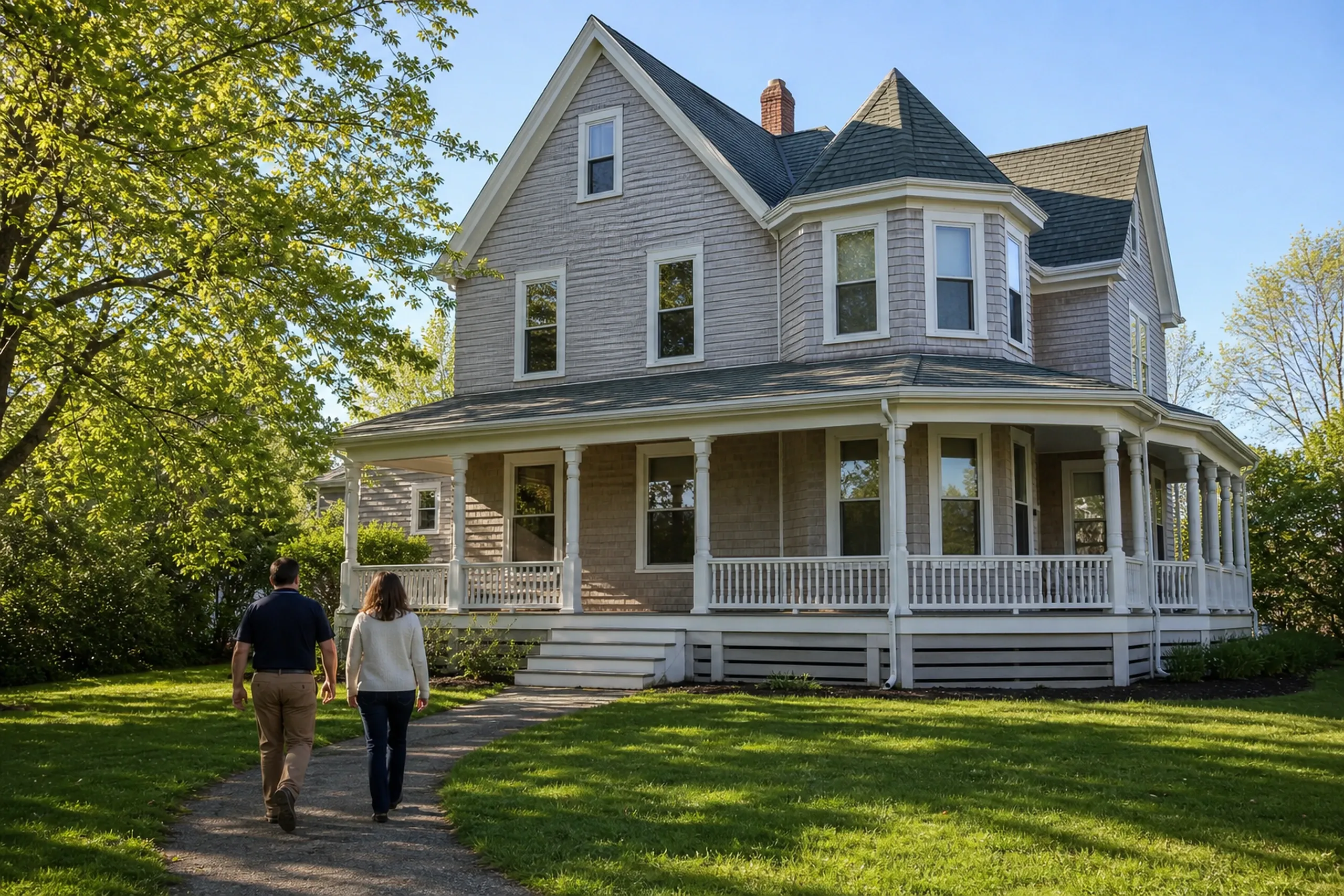
Each wall finished before the next, then a walk.
Every wall is shingled from its doubled first course to the eaves before the next one is stripped. When the last course is on, we walk every corner, joint and flashing with you.
When Does Cedar Shingle Siding Make Sense for a House?
Cedar shingle siding makes sense for a house that was meant to wear shingles, or when you want the look of a Maine farmhouse or camp and welcome a wall that changes color as it ages. It earns its price on a house you mean to keep.
Cedar is the wrong wall on a tight budget, since it costs more per square than any siding we install, or when you want one painted color with little upkeep. Paint does not bond to weathered cedar, the Forest Products Laboratory says, so a peeling painted wall must be stripped back before repainting.
Cedar is also wrong over a wall that cannot dry. Shingles that give like a sponge or break apart under a thumb point to rot that has to be opened up first, while a few cracked shingles on a sound wall need siding repair, not a re-side.
Who Picks Cedar, Where Does It Go, and When?
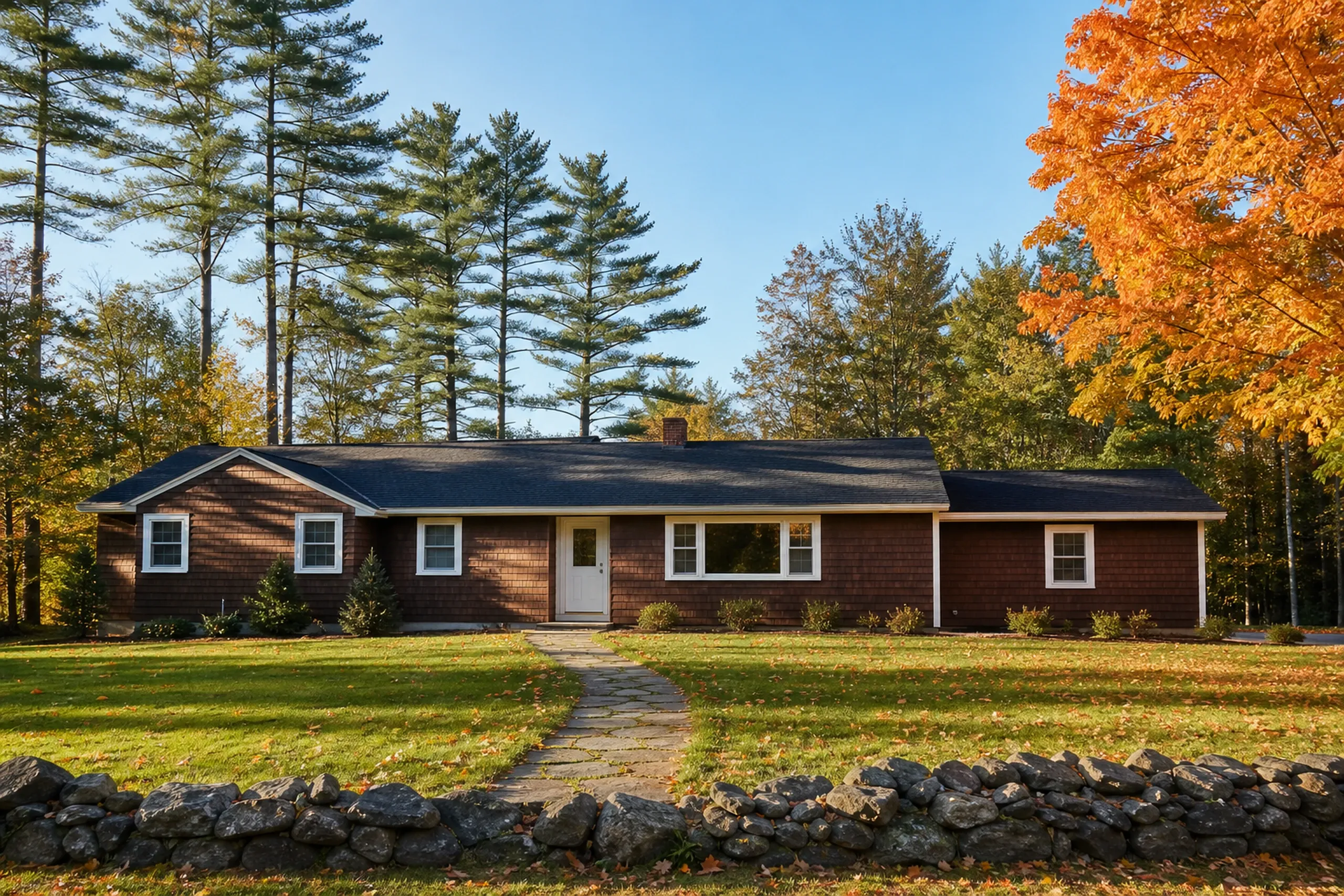
Who should choose cedar shingle siding?
Homeowners who should choose cedar shingle siding own capes, farmhouses or lake camps that were shingled to begin with, or have worn, stained or leaking shingles to replace in kind. Anyone happy with a weathered gray wall and no paint schedule fits best of all.
Where on the house do cedar shingles work?
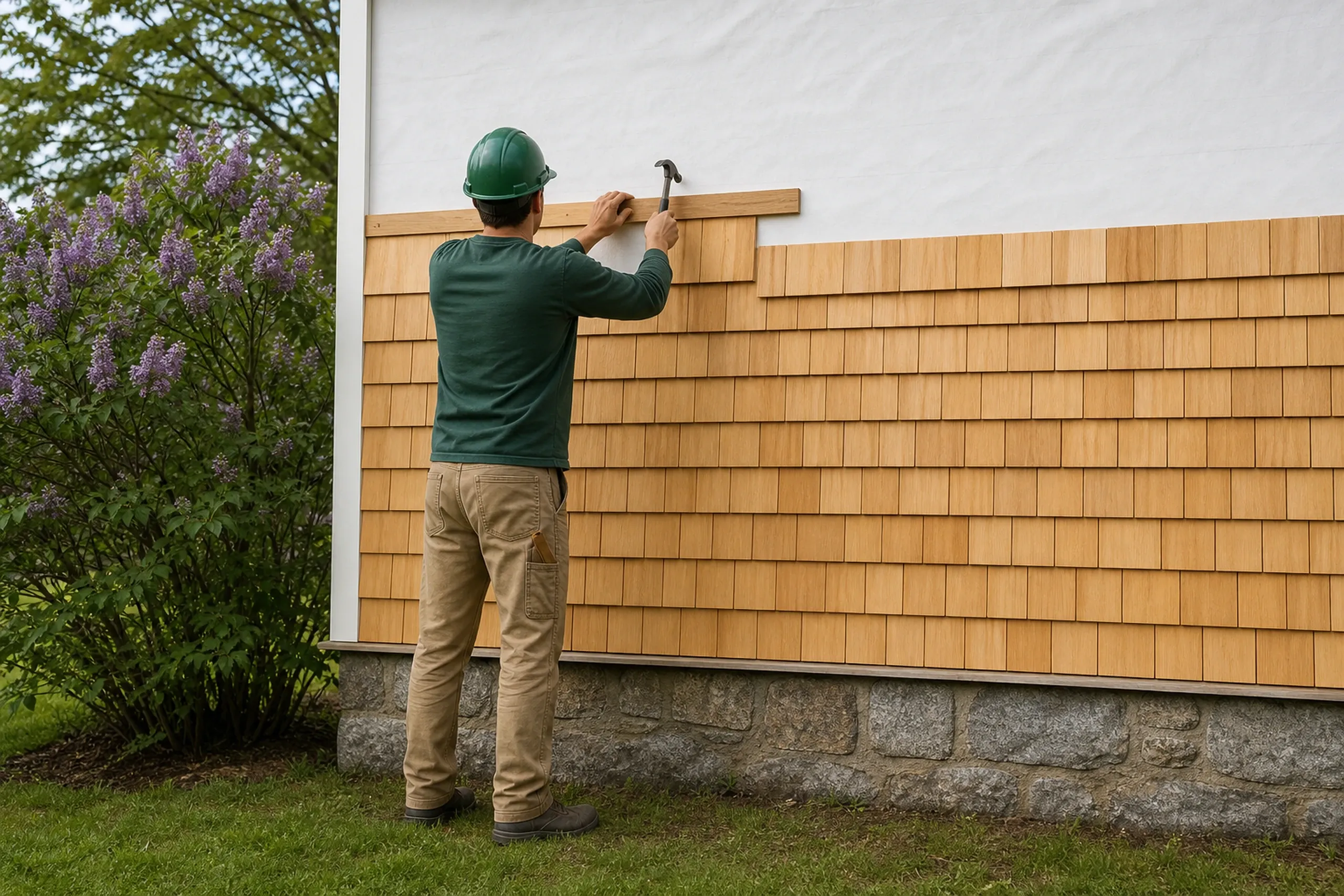
Cedar shingles work on every wall, one side, or only the gable ends and dormers above lap siding, a way to bring cedar onto a house without paying for it everywhere.
When is the best time to shingle and stain?
The best time to shingle and stain runs from late spring into early fall. The Forest Products Laboratory says finishes go on wood below 20 percent moisture, above 40 to 50 degrees Fahrenheit during application and for 24 hours after, depending on the finish maker.
How Much Does Cedar Shingle Siding Cost?
Cedar shingle siding costs about $2,000 per square in the Lewiston-Auburn area, meaning each 100 square feet of wall, and that figure folds in the tear-off and everything that goes back on. Treat it as a planning average from many cedar quotes, never a price for your house.
| House size | Cedar shingles, installed |
|---|---|
| Small20 to 25 squares | $40,000 to $50,000 |
| Medium25 to 32 squares | $50,000 to $64,000 |
| Large32+ squares | from $64,000 |
Whole-house cedar figures are averages of many local quotes, not an offer; species, grade and anything rotten behind the old wall can move the total higher than its row shows.
What moves a cedar price most after the shingle?
Grade and exposure move a cedar price most once the species is picked (a shorter exposure takes more shingles per square), along with any rot the tear-off finds. Stories, rain-screen furring, corners, trim and the finish system follow.
Does putting cedar over the old siding save money?
Putting cedar over the old siding saves money by skipping removal and disposal, and it is the lower-cost route we suggest for a wall covered in asbestos-cement shingle or clapboard under old lead paint. The covering underneath has to be flat and take nails solidly, so a soft or wet wall still gets opened.
What does cedar cost to keep up over the years?
Natural cedar adds almost nothing to keep up beyond a gentle wash now and then, since weathering is the point. Stain differs: semitransparent stain, by the Forest Products Laboratory's count, usually holds 4 to 5 years on the south side and more than 10 on the north, so a color comes with a schedule.
How Do You Start a Cedar Shingle Project?
A cedar shingle project starts with a free estimate request; at the visit we read each wall and write down the grade and finish along with the price per square. No money changes hands before you sign a contract.