
Skilled LP Siding | Siding Replacement Lewiston
LP siding is engineered wood board, sold as LP SmartSide, that cuts like lumber and takes paint like lumber, and on Lewiston-Auburn area houses it is our pick when a vinyl wall would look wrong. We install it the way LP's own instructions read: barrier and flashing first, every cut sealed, and paint on inside LP's stated window.
- (207) 515-8586
- 217 Main St, 2nd Floor, Lewiston
- [email protected]
- Siding only, start to finish
- Free estimate requests
- 22 towns around Lewiston-Auburn
- Every cut edge sealed
- Kick-out flashing at each roof line
- A paint plan set before install
This page is about LP siding: LP's SmartSide engineered wood lap boards, panels and trim, installed on houses in the Lewiston-Auburn area over a new water-resistive barrier with flashing, sealed cuts and a finish coat.
It suits owners who want painted wood boards on a farmhouse, colonial or Victorian for less than fiber cement. Siding Replacement Lewiston follows LP's own instructions on the details that decide how the boards age: clearance above the ground, gapped and sealed joints, and paint inside LP's stated window.
On cost, LP siding lands between vinyl and fiber cement, averaging $1,200 to $1,500 per square (100 square feet of wall) across many quotes here.
Why Does Engineered Wood Siding Need Careful Installers?
Engineered wood siding needs careful installers because the details LP spells out (ground clearance, gapped joints, sealed cuts, timely paint) are the details LP's warranty leans on. LP's warranty excludes damage from failing to properly cut, prime or paint the product, and from moisture or contact with soil, mulch or timbers left lying against the wall.
- A 3/16 inch gap at every butt joint, as LP's FAQ calls for, closed with sealant or joint molding
- Every exposed cut on siding and trim sealed with paint or caulk, never left raw
- The bottom course held clear of soil and mulch, because LP designs these boards for above-ground use only
Which sidings do owners weigh against LP?
 Hardie SidingDense board that shrugs off salt air, sparks and wind-driven rain.See Hardie Siding
 Vinyl Siding ReplacementThe re-side most Maine houses get, priced by the square.See Vinyl Siding Replacement
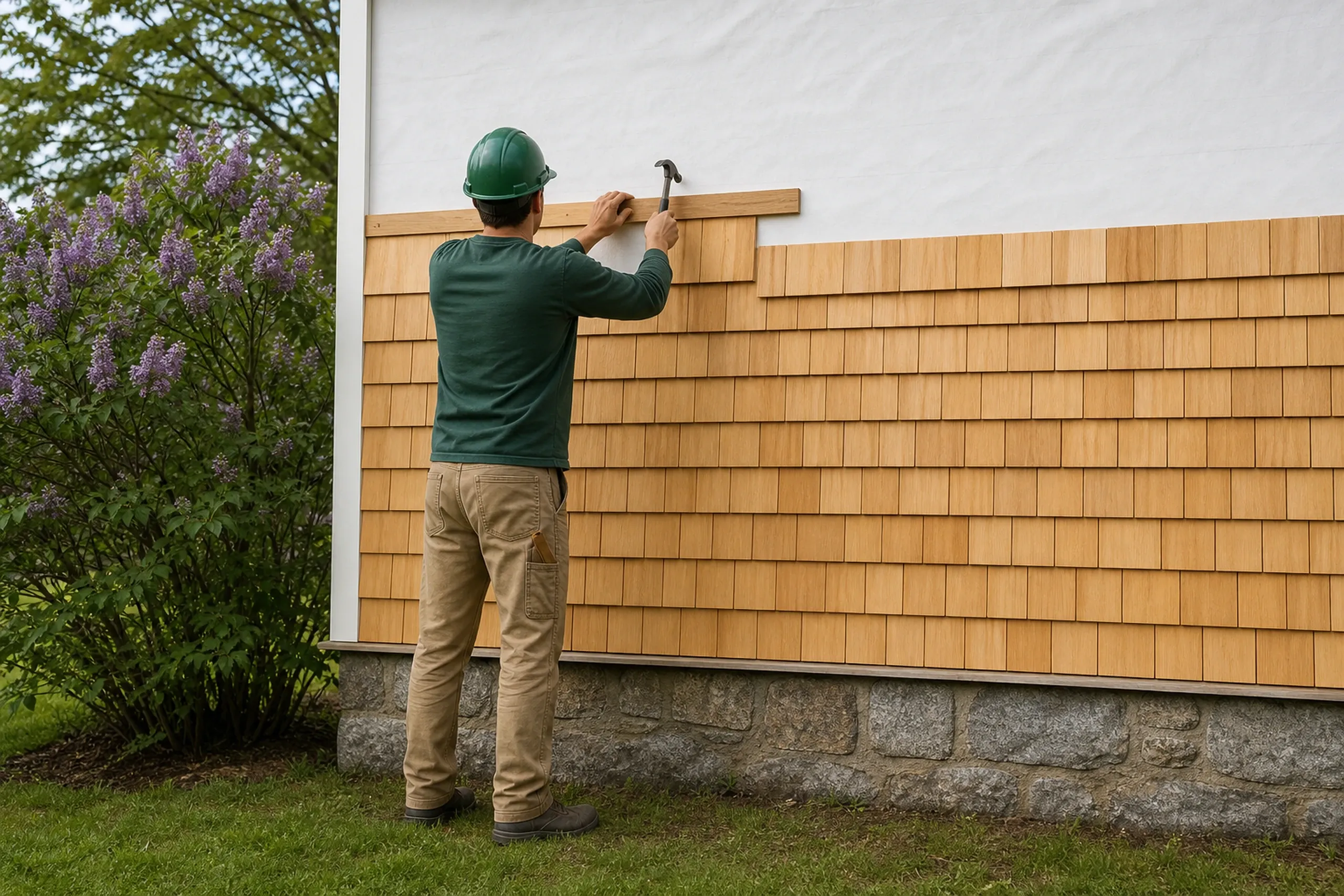 Cedar Shingle SidingThe shingled wall Maine is known for, laid course by course.See Cedar Shingle Siding
Where in the area do we put up LP siding?
- AuburnME1 mi from Lewiston
- MinotME5 mi from Lewiston
- SabattusME5 mi from Lewiston
- GreeneME7 mi from Lewiston
- Mechanic FallsME9 mi from Lewiston
- PolandME9 mi from Lewiston
- WalesME9 mi from Lewiston
- DurhamME10 mi from Lewiston
- New GloucesterME10 mi from Lewiston
- LisbonME10 mi from Lewiston
- TurnerME11 mi from Lewiston
- HebronME12 mi from Lewiston
- BowdoinME13 mi from Lewiston
- MonmouthME13 mi from Lewiston
- LitchfieldME14 mi from Lewiston
- OxfordME14 mi from Lewiston
- PownalME14 mi from Lewiston
- LeedsME15 mi from Lewiston
- BuckfieldME15 mi from Lewiston
- OtisfieldME16 mi from Lewiston
- CascoME17 mi from Lewiston
What Should You Weigh Before Choosing LP SmartSide?
Choosing LP SmartSide comes down to what the board is, how it goes on through a Maine winter, and whether fiber cement or vinyl would serve the wall better.
What LP's Engineered Wood Does Well, and Its Limits
LP says each SmartSide board is treated through its full thickness with binders, waxes and zinc borate before a water-resistant, resin-saturated overlay is bonded to the face. LP also states that its trim and siding resist freeze/thaw damage, which counts on a wall that thaws every March afternoon and refreezes by dark.
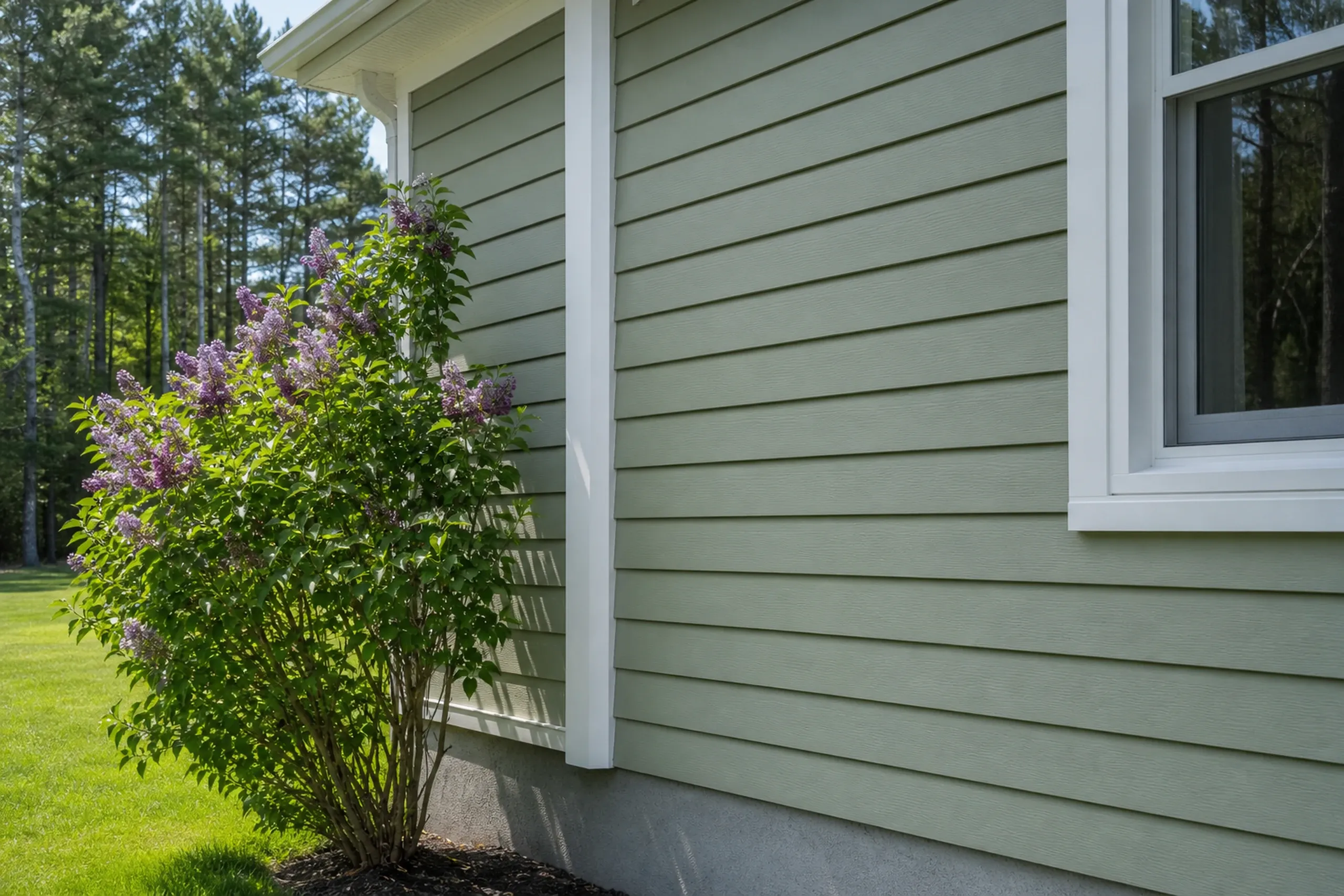
The boards come primed in a cedar texture or a brushed smooth face, or prefinished at the factory, and they cut and nail with ordinary woodworking tools.
The limits are real, and we would rather you hear them from us. LP rates its lap siding Class C under ASTM E84, not Class A, and says the boards are not made for ground contact or curved walls.
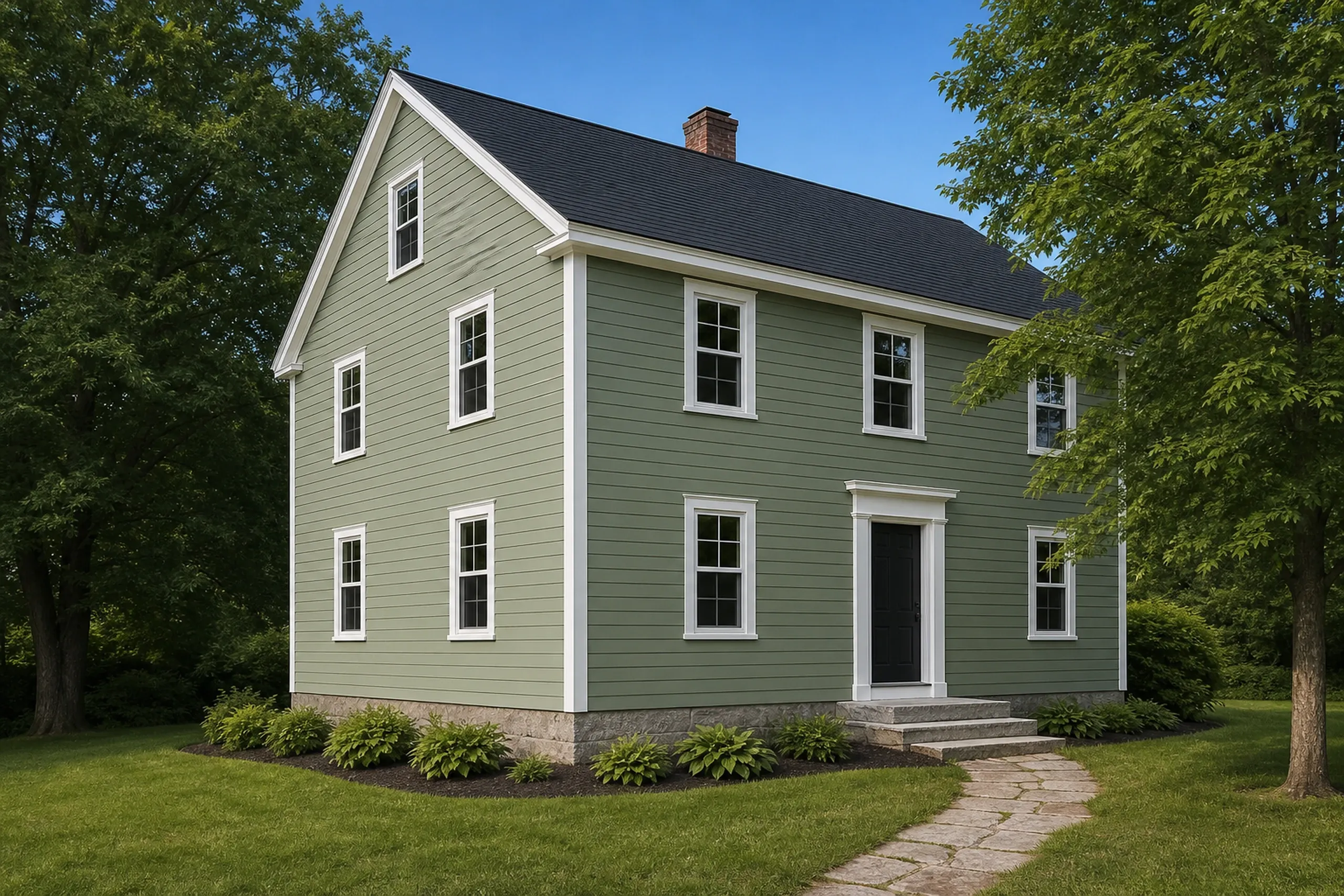
How We Install LP Through Maine Freeze and Thaw
Every LP wall gets a water barrier that meets code, step flashing where a roof runs along a sidewall and a kick-out at each place where an eave meets the wall, as LP's instructions require. Siding and trim stop short of the kick-out and the gutter rather than running into them.
Engineered wood grows in length as it takes on local moisture: LP's technical FAQ says boards leave the mill below 5% moisture content and then settle to the climate they are hung in. That is why the butt joints are gapped and every field cut is sealed.
Snow piled along a foundation makes ground clearance the detail we watch hardest, and LP's lap siding instructions call for at least 6 inches between the siding and finished grade.
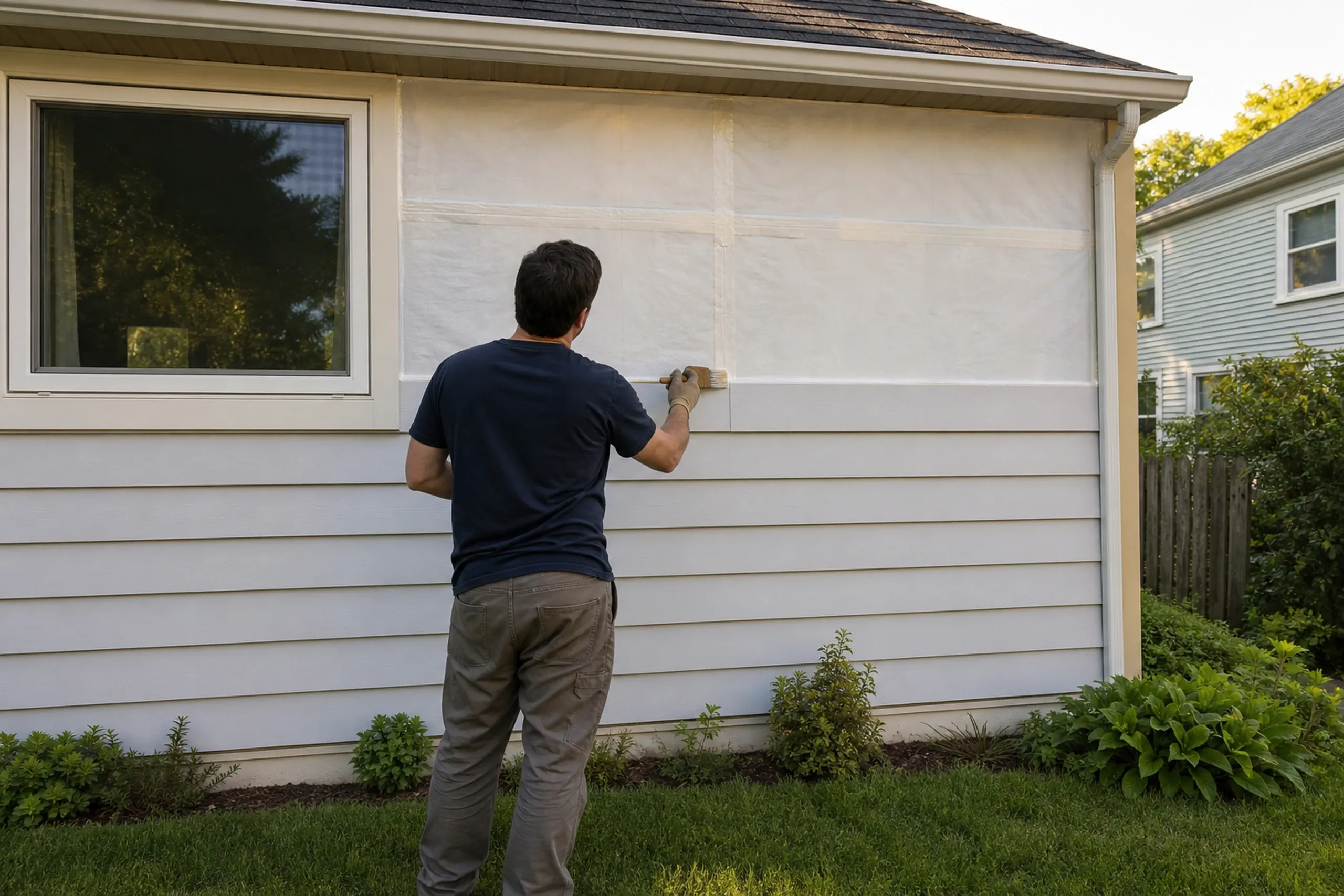
Where LP Sits Between Vinyl and Fiber Cement
On price, LP sits in the middle: it averages $1,200 to $1,500 per square here, against $800 to $1,000 for vinyl siding replacement and $1,300 to $1,600 for James Hardie fiber cement.
We point owners to LP when they want painted boards and accept a repaint cycle set by their paint maker, since LP gives no fixed interval of its own. A plain house on a tight budget is better off in vinyl, and an owner who wants the traditional shingled wall should look at cedar shingle siding.
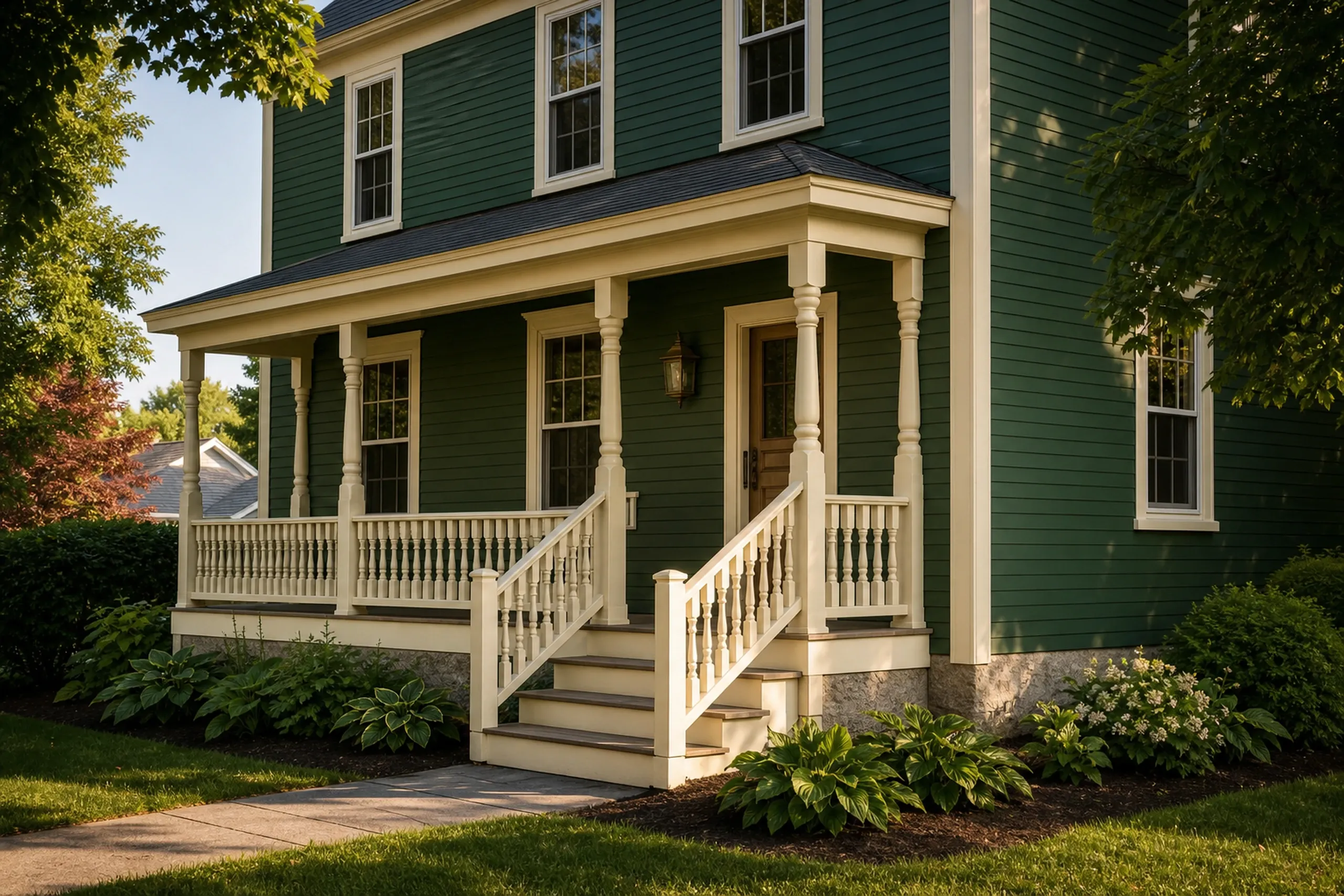
What LP Siding Services Do We Offer?
Our LP jobs cover the whole wall assembly, not only the boards you see.
Painted clapboards on a pre-1978 house are removed under the terms of the EPA's lead-safe renovation rule. Where re-siding needs a town permit, we pull it, and approval remains the town's decision.
- Tear-off to bare sheathing, a check of every board, and replacement of any that are soaked, soft or buckled
- A code-approved barrier behind the boards, flashed windows and doors, and step and kick-out flashing wherever a roof meets a wall
- LP SmartSide lap, panel and trim, primed or factory-finished, with gapped butt joints and sealed cuts
What Happens, in Order, on an LP Siding Job?
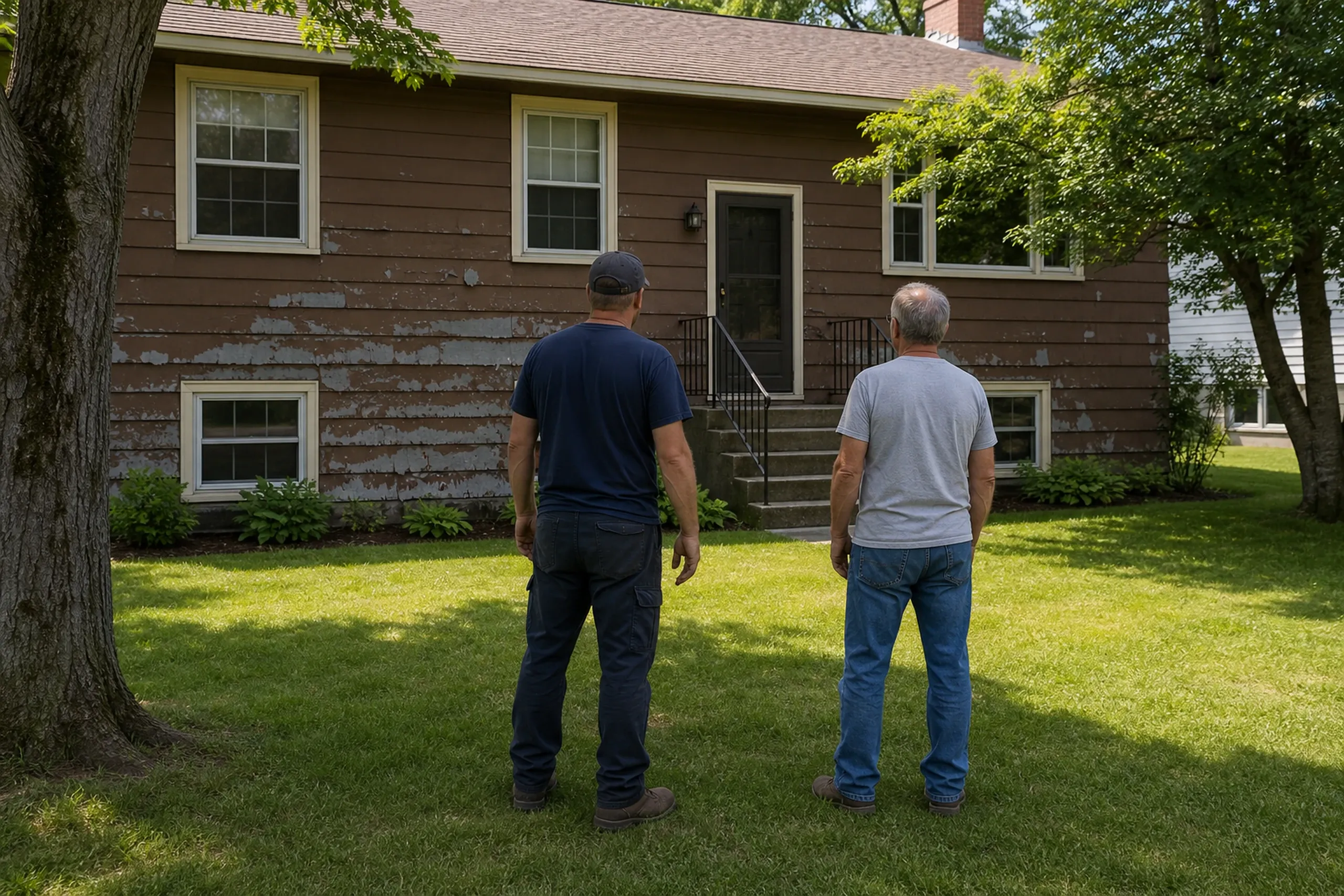
A close read of every wall.
Soft sills, dark streaks under a roof edge and loose trim at window heads all hint at what the tear-off will find, and we tell you what we see.
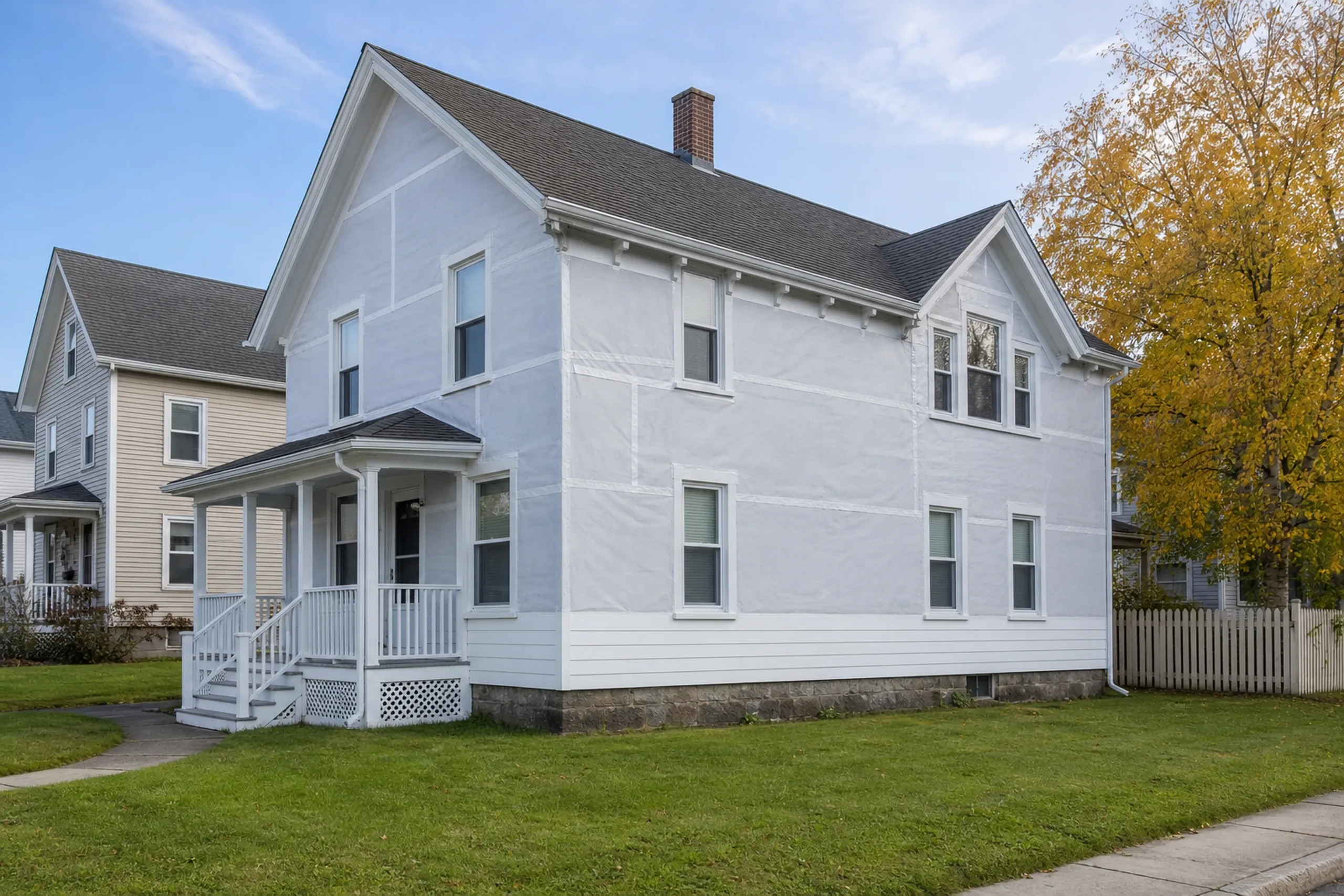
The price and the paint plan in a signed contract.
Your written price names the LP product, the trim, the flashing and who finishes the primed boards inside LP's 180 days. That contract is not optional above $3,000: 10 MRSA §1487 demands it in writing and caps the deposit at a third of the price.
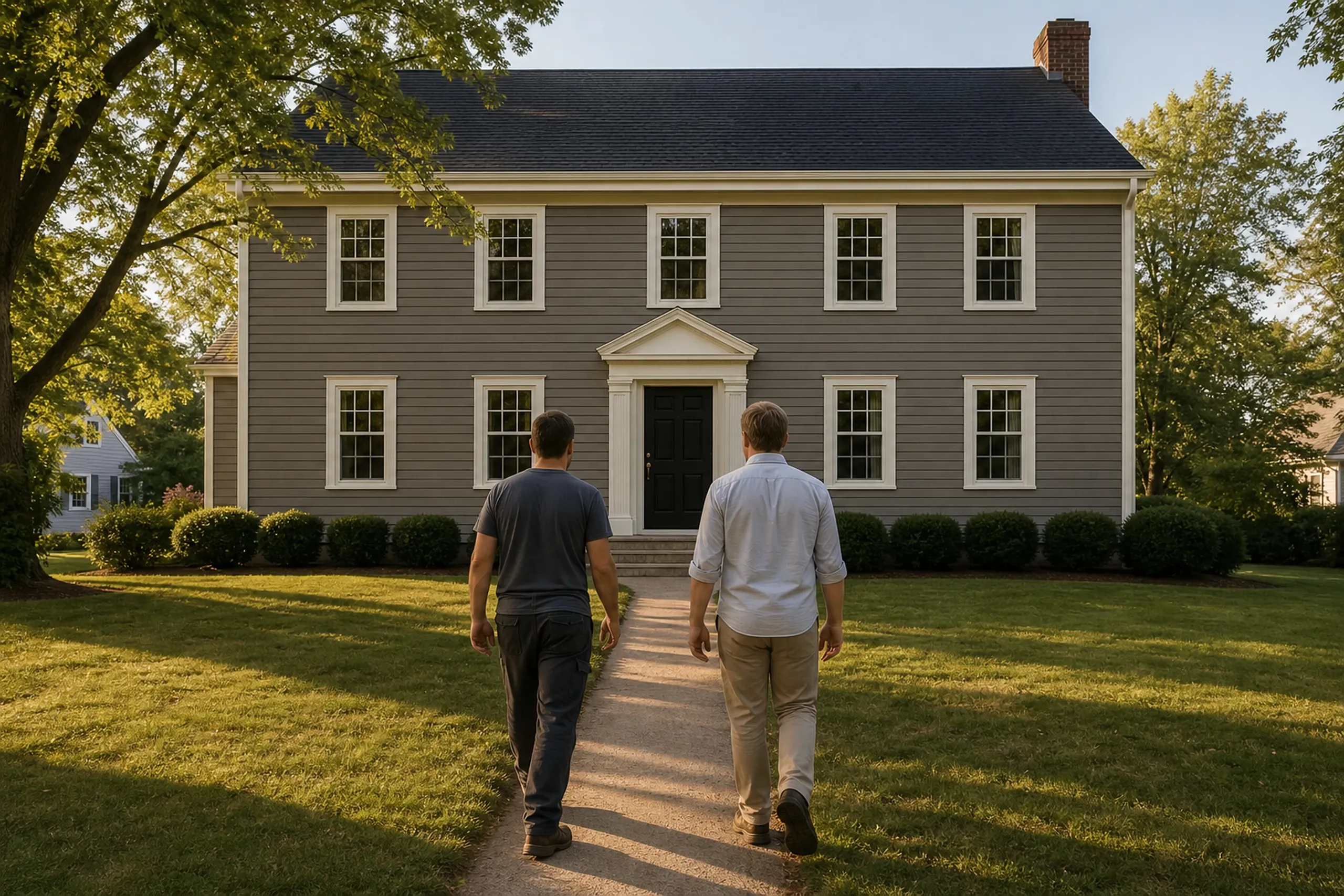
Boards up one wall at a time, then a walk around.
Each wall goes from bare sheathing to sealed, trimmed boards before the next one is opened. At the end we circle the house with you, and every scrap of old siding goes with us.
When Does LP Siding Make Sense, and When Not?
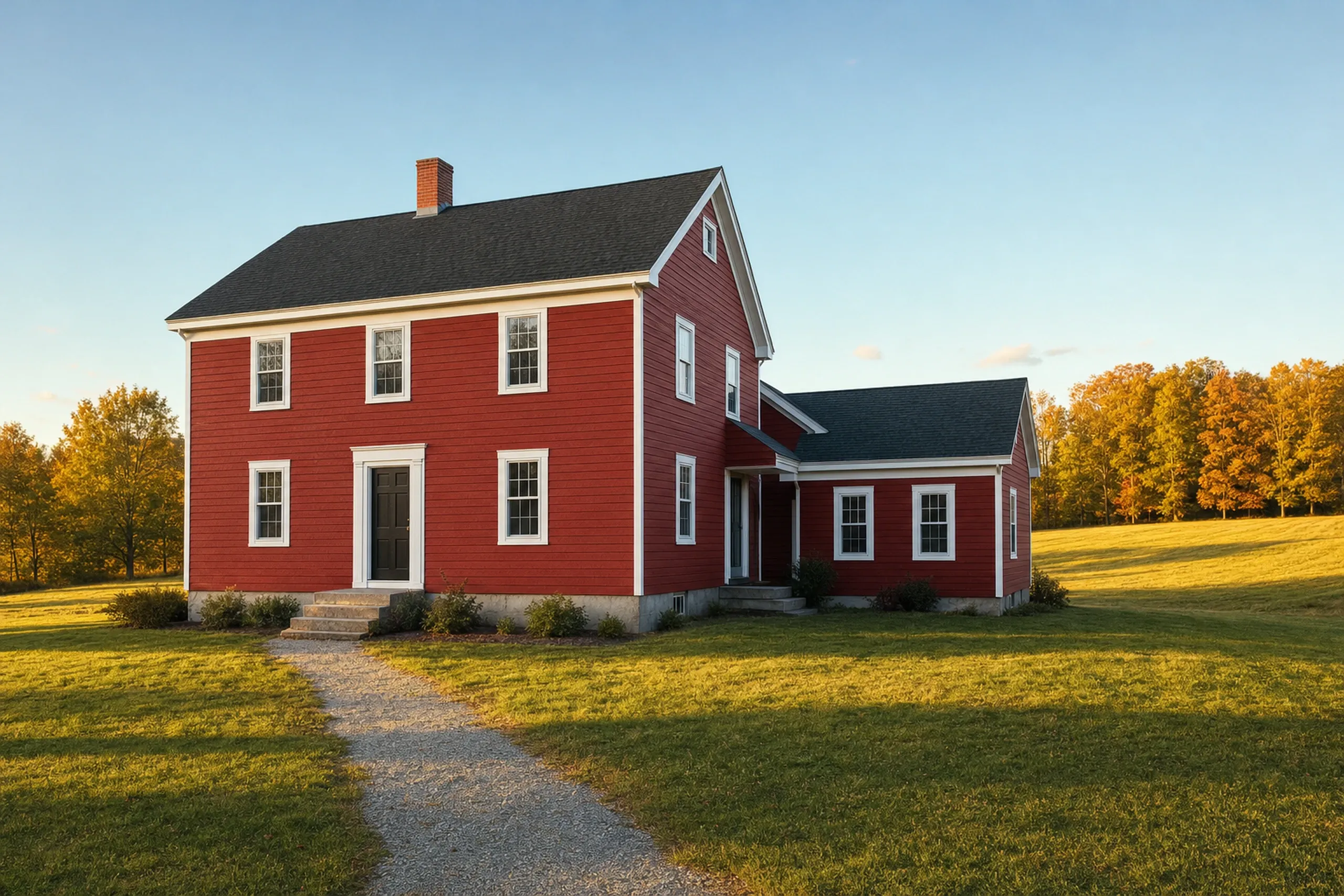
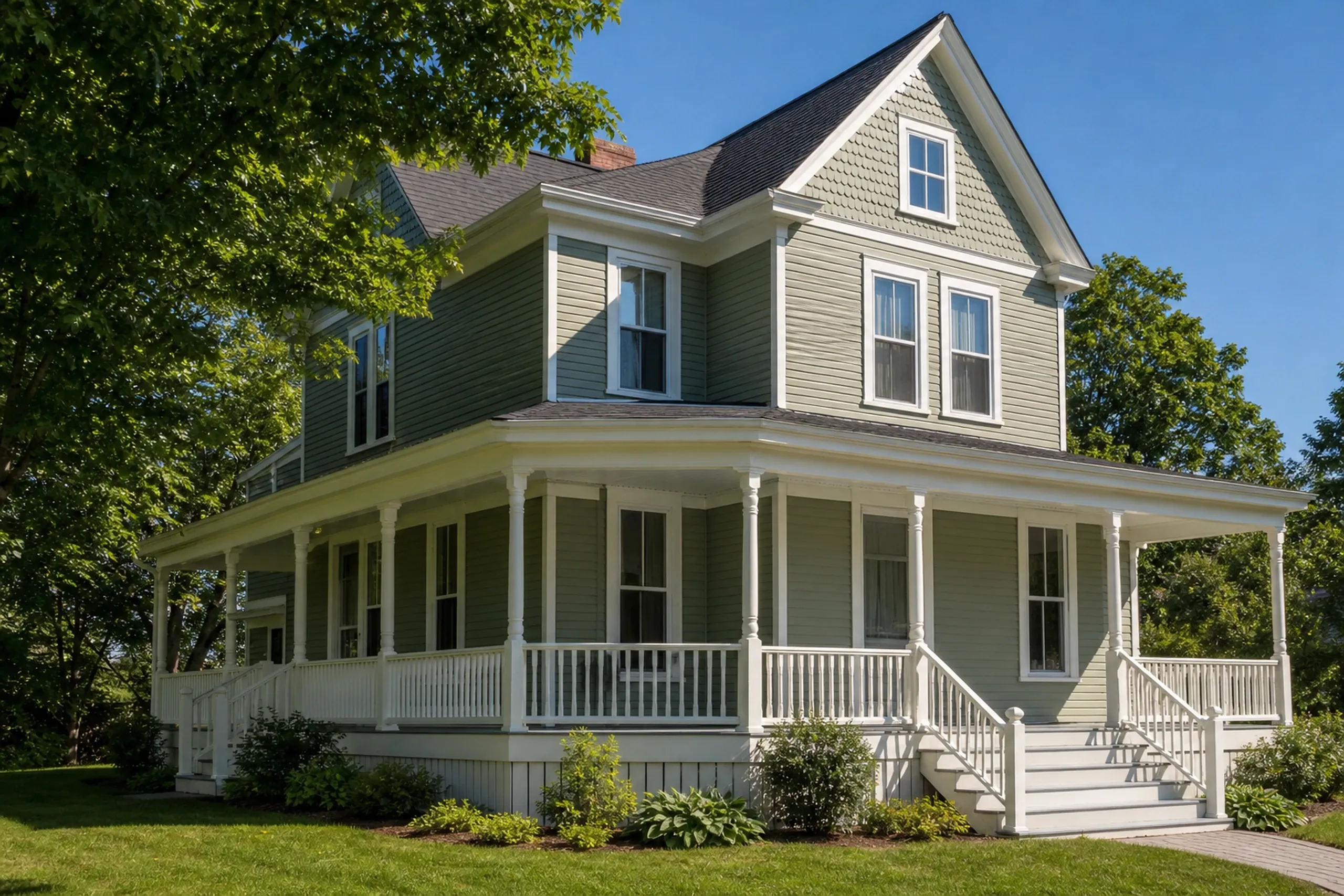
LP siding makes sense on a house that should look painted and wooden, such as a farmhouse with an ell, a 1980s colonial or a Victorian with wide casings, where vinyl would read as a cover-up. It costs more than vinyl, and on those houses we think the money is well spent.
It makes no sense where siding would sit in soil, mulch or standing meltwater, on a curved wall, or for an owner who never wants to paint again. LP also says not to apply its siding over rain-soaked or buckled sheathing, so a wet wall gets fixed and dried before a single board goes on.
Read the warranty before you choose. LP calls it the LP SmartSide Prorated 50-Year Limited Warranty, and LP's warranty document says it pays labor and material on affected product for the first 5 years, then material only, reduced 2.22% a year, through year 50, provided the boards were installed, finished and maintained to its instructions.
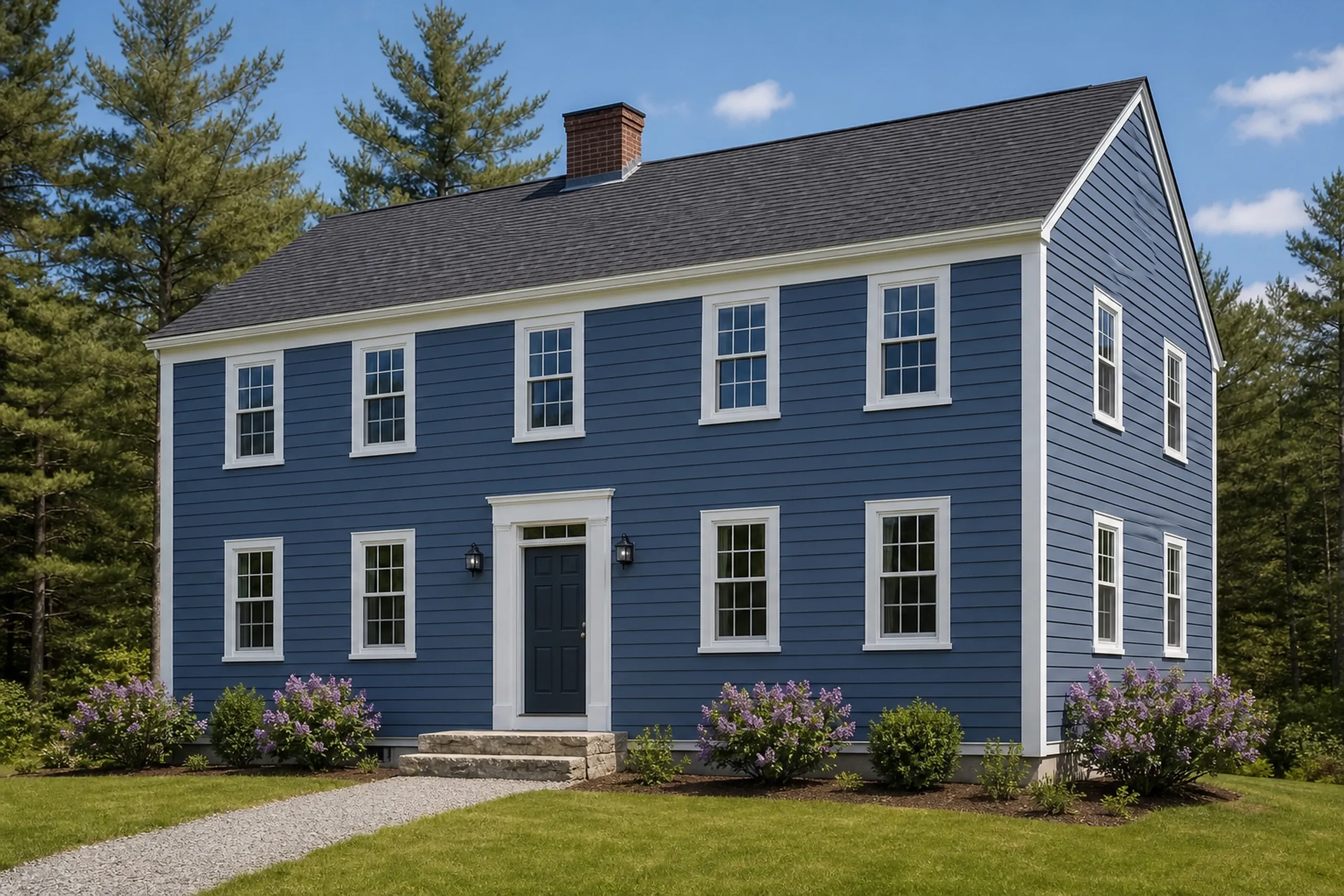
Who Is LP For, Which Walls Suit It, and When?
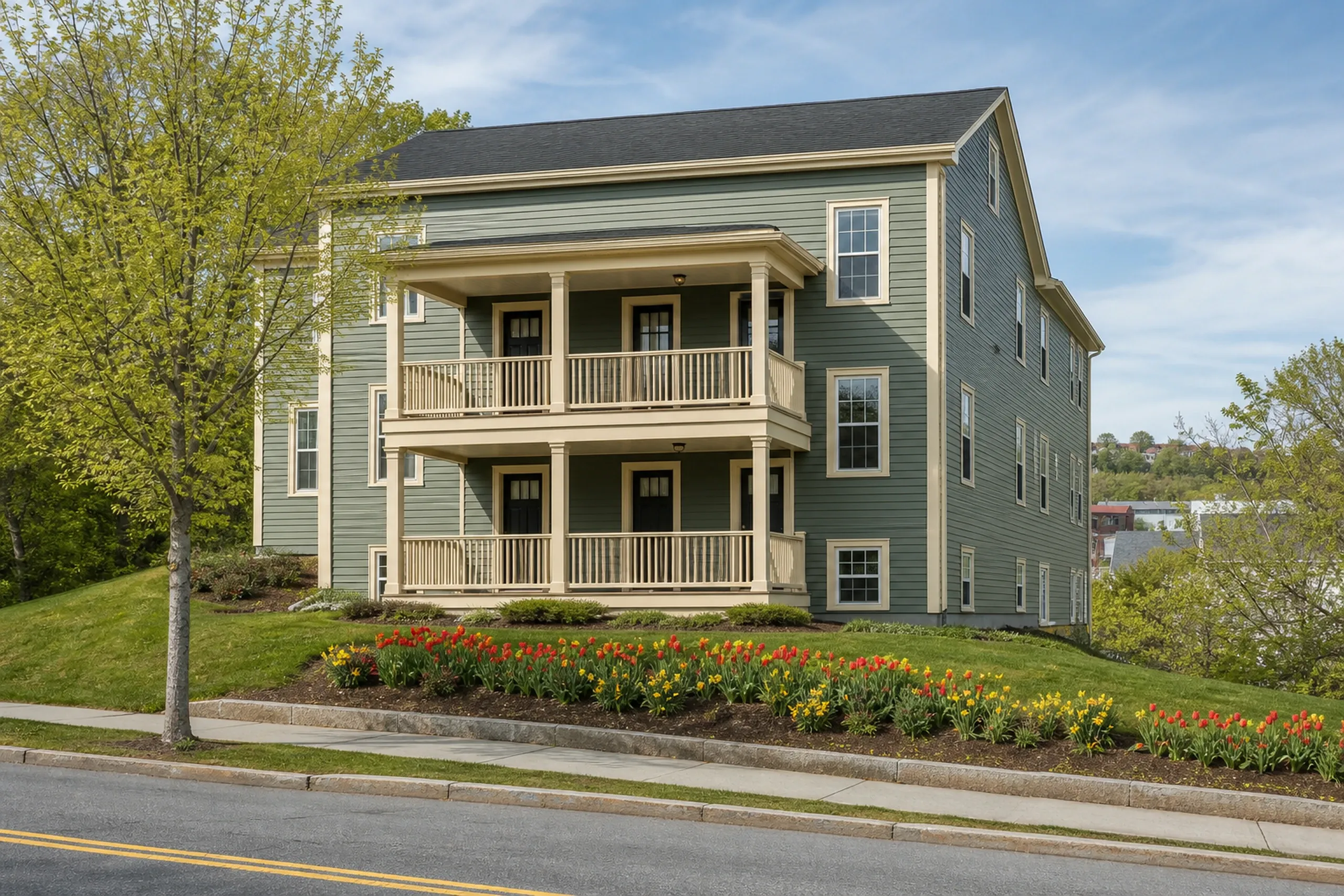
What kind of owner picks LP SmartSide?
The owner who picks LP SmartSide usually wants painted boards with a wood grain on a traditional house, or is replacing worn wood, hardboard or vinyl and wants a step up in looks. A landlord re-siding a plain duplex usually does better in vinyl.
Which walls suit LP siding?
LP siding suits any flat wall above grade, a full exterior or a single elevation, as long as the bottom course stays clear of soil and mulch. On a lake house, the face toward the water takes the hardest wind-driven rain, so its flashing and window heads matter most.
What time of year should LP go up?
LP should go up between late spring and early fall, because primed boards need their finish coat within LP's 180 days and exterior paint goes on best in mild weather. A November install can take its paint in spring, inside that window.
What Does LP Siding Cost, and How Much Can It Move?
On a typical house in the Lewiston-Auburn area, LP siding costs $1,200 to $1,500 per square (100 square feet of wall), with tear-off, barrier, flashing, trim and haul-away counted. Read these as planning numbers, not a quote: they average many quotes, and every house has details that push it either way.
| House size | LP SmartSide, installed |
|---|---|
| Small20 to 25 squares | $24,000 to $37,500 |
| Medium25 to 32 squares | $30,000 to $48,000 |
| Large32+ squares | from $38,500 |
LP SmartSide figures averaged across many local quotes, not a bid; anything the tear-off exposes (wet sheathing, rot, framing trouble) can move a house out of its row. LP and SmartSide are registered trademarks of Louisiana-Pacific Corporation. We are an independent installer and are not affiliated with LP.
Once the boards are chosen, what drives an LP price?
Once the boards are chosen, the old wall drives an LP price most: soft sheathing, a rotted sill or an opening that was never flashed all add work first. Stories and hard-to-reach gables come next, then the amount of trim, since every trim piece is cut and sealed by hand.
Is putting LP over the old siding cheaper?
Putting LP over the old siding is cheaper because the tear-off and disposal drop out, and LP permits it over existing wood or wood-composite siding that is flat and sound, with a fresh barrier between the layers. That can leave lead-painted clapboards undisturbed, but over aluminum, vinyl or any soft section the old layer comes off first.
Is paint part of the LP budget?
Paint is part of every LP budget, because primed boards need a finish coat, and that coat is real labor and material. Factory-finished boards arrive already coated in LP's 100% acrylic satin paint, and we can price both ways on one written quote.
How Do You Start an LP Siding Estimate?
An LP siding estimate starts with a free request: we come out, check what the old siding is covering, and write the price per square along with the paint plan. The contract you sign is the only thing that starts the work.