
Professional Vinyl Siding Replacement | Siding Replacement Lewiston
Vinyl siding replacement is the lowest-cost way to put a dry, new wall on a house in the Lewiston-Auburn area, and we price it the plain way: the cost per square goes on paper before the first old panel comes down. Then we check the sheathing, flash every opening and hang vinyl loose enough to ride out a Maine winter.
- (207) 515-8586
- 217 Main St, 2nd Floor, Lewiston
- [email protected]
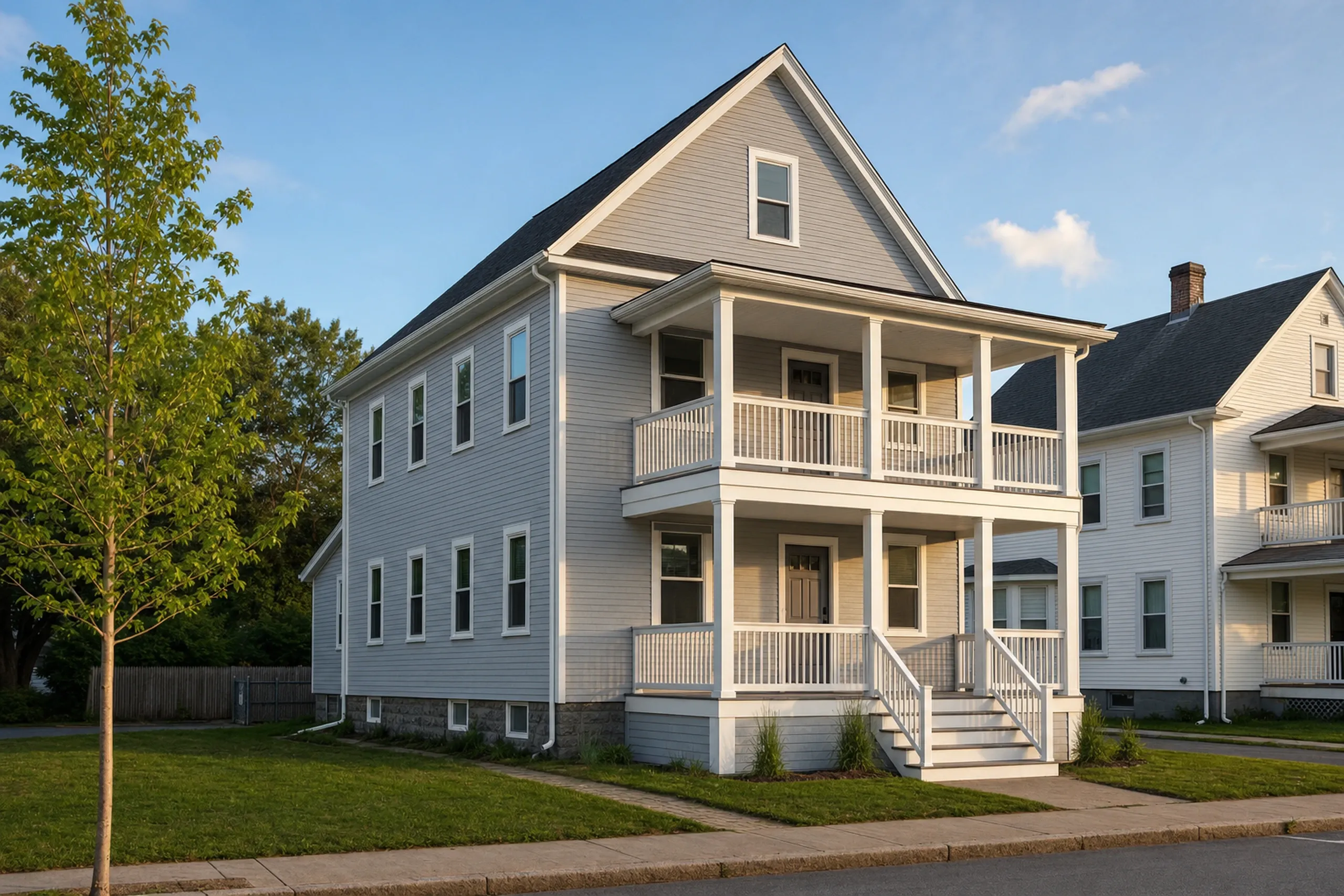
- Siding only, start to finish
- Free estimate requests
- 22 towns around Lewiston-Auburn
- The per-square price in writing
- Sills and window heads checked first
- Every panel hung free to slide
This page explains vinyl siding replacement for houses in the Lewiston-Auburn area: the old siding comes off, the sheathing and window flashing are checked and fixed, and new vinyl panels, soffit and trim go up over a fresh water-resistive barrier.
It suits owners of capes, ranches, duplexes and triple-deckers whose panels have cracked, chalked or worked loose, or whose aluminum or wood siding is past saving. Siding Replacement Lewiston puts the price per square in writing before a single wall is opened, and re-sides the house side by side rather than all at once.
One figure matters most: vinyl averages $800 to $1,000 per square (100 square feet of wall) over many quotes in this area, less than any other siding we install.
Why Do Old Vinyl Walls Fail Before Their Time?
Old vinyl walls fail before their time because the panels were nailed tight, the openings were never flashed, or the wall behind them was already wet. By the Vinyl Siding Institute's numbers, a 12 foot 6 inch panel moves half an inch or more between a cold morning and a hot afternoon, and a pinned panel has nowhere to go but out.
- Nails set in the center of each slot with room to slide, never driven through the face of a panel
- Metal head flashing over every window and door, with the new housewrap lapped over it
- A starter strip made for that panel's lock, because VSI ties blown-off bottom courses to mismatched ones
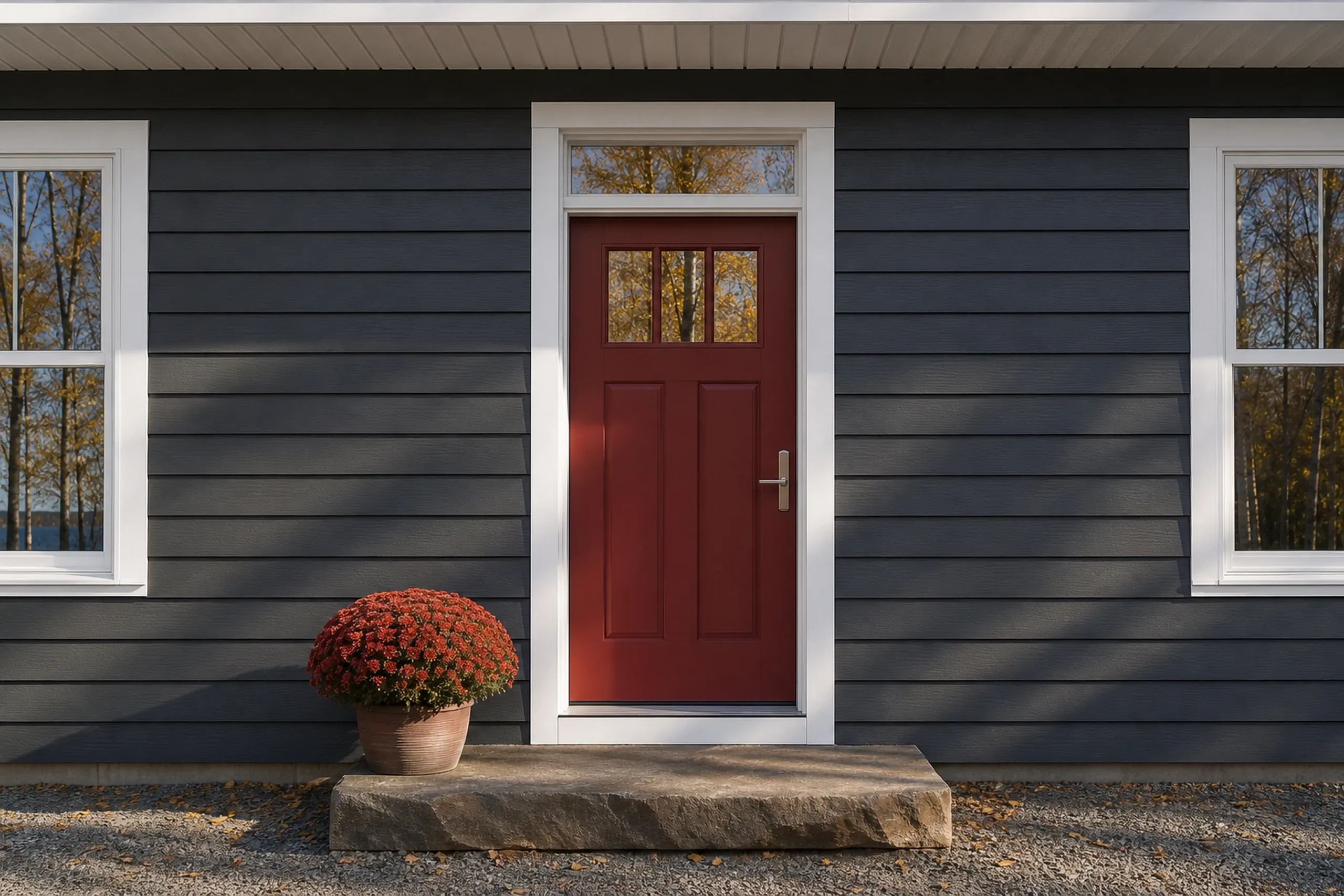
What could you choose instead of a full vinyl job?
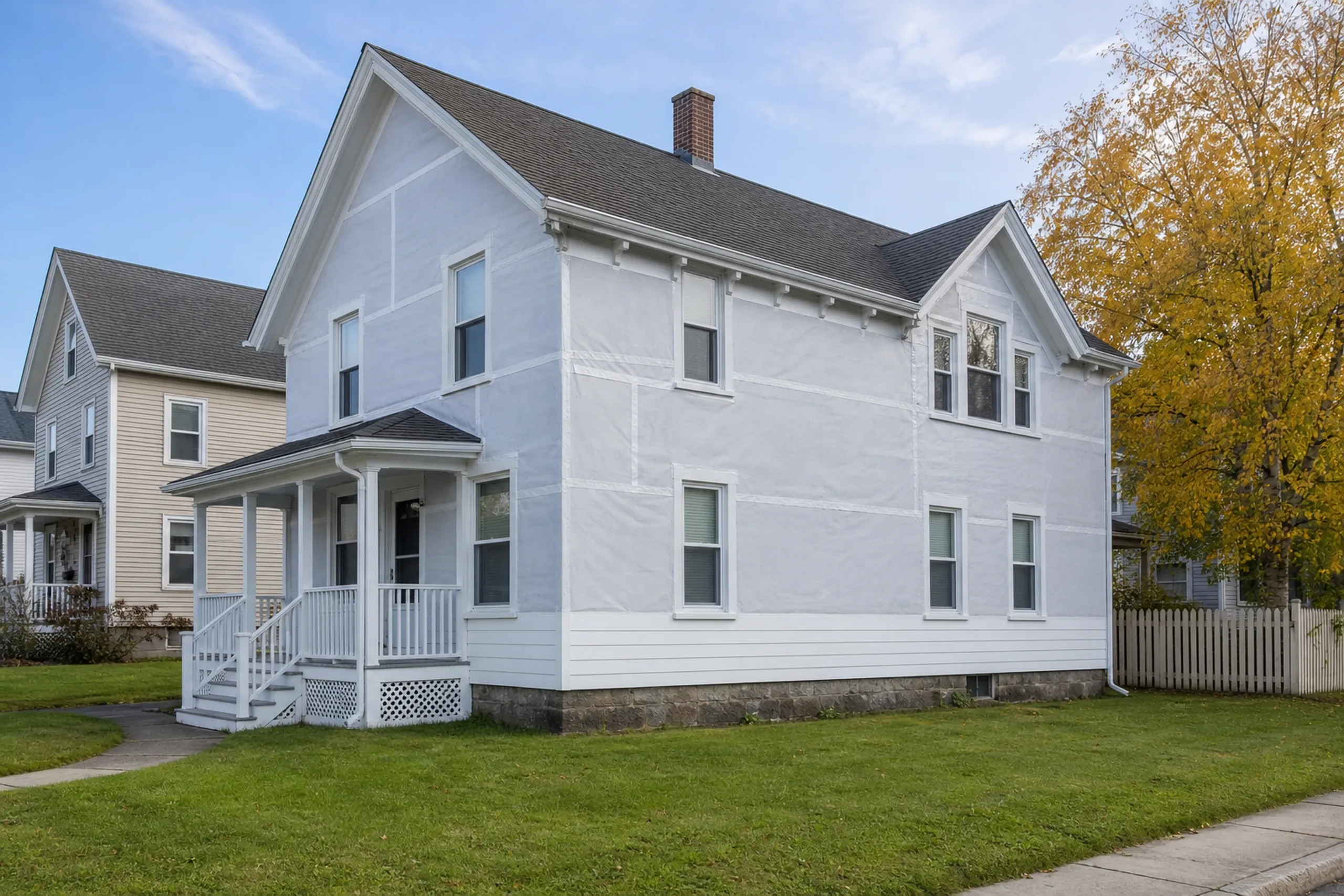
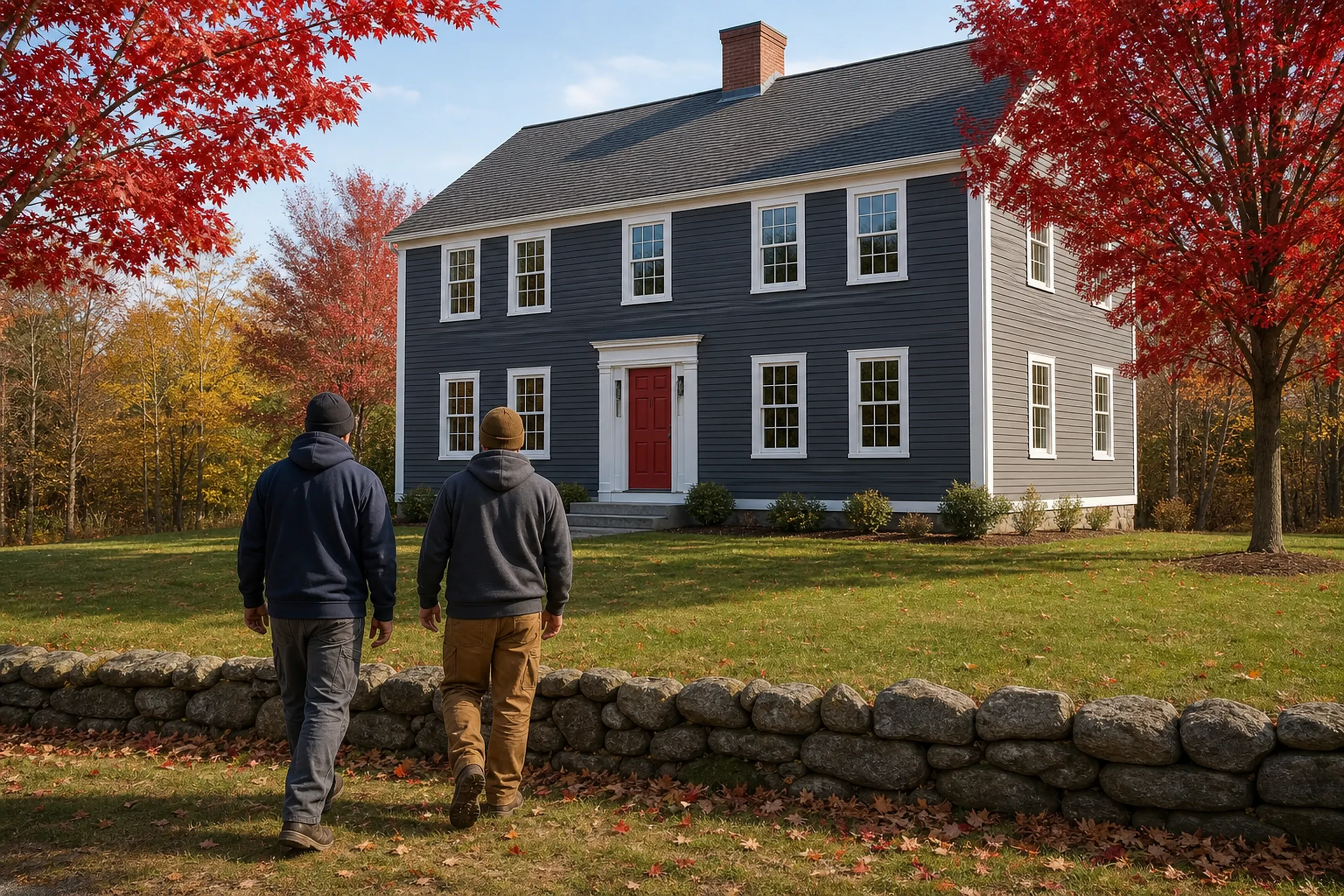
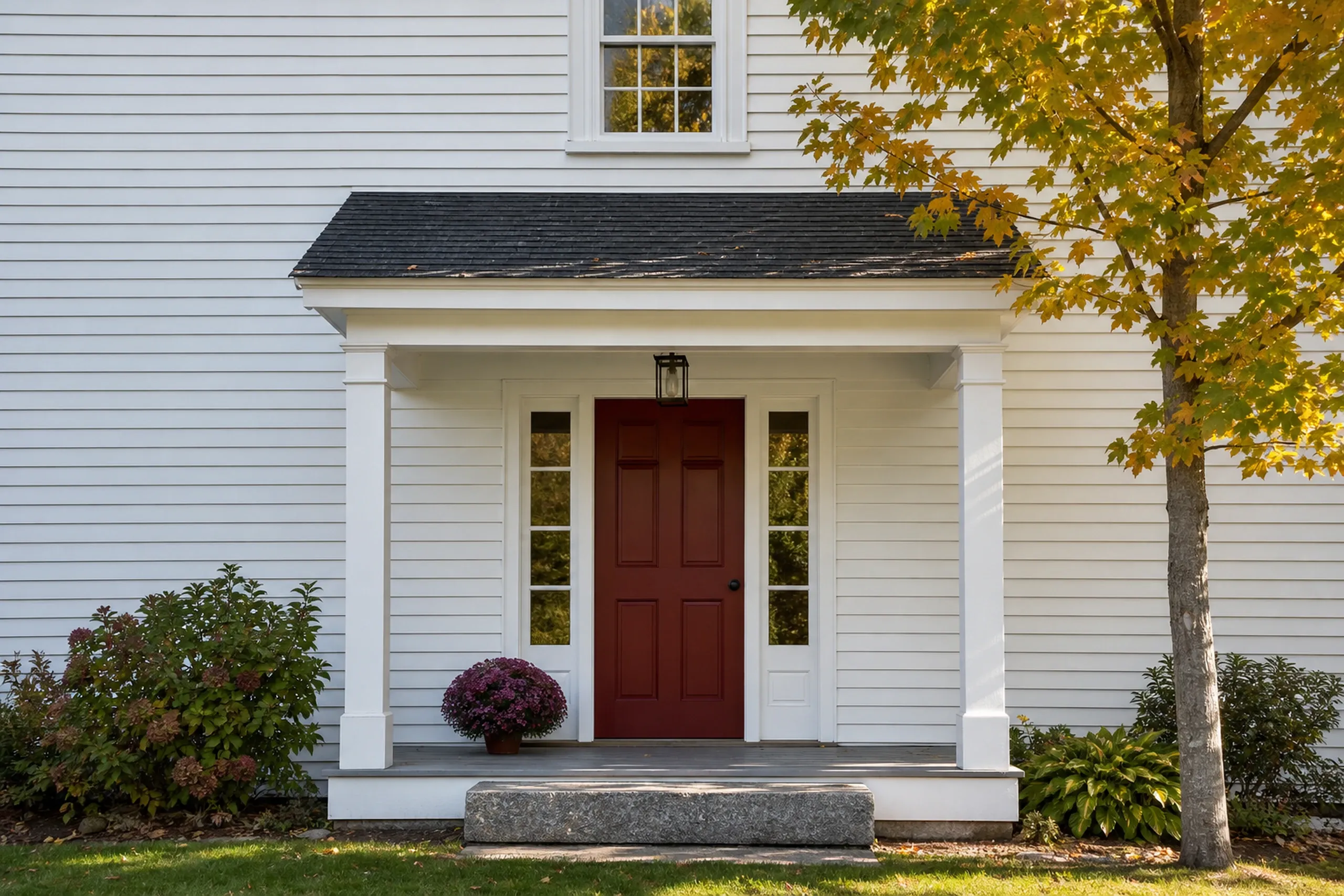
Where do we replace vinyl siding?
- AuburnME1 mi from Lewiston
- MinotME5 mi from Lewiston
- SabattusME5 mi from Lewiston
- GreeneME7 mi from Lewiston
- Mechanic FallsME9 mi from Lewiston
- PolandME9 mi from Lewiston
- WalesME9 mi from Lewiston
- DurhamME10 mi from Lewiston
- New GloucesterME10 mi from Lewiston
- LisbonME10 mi from Lewiston
- TurnerME11 mi from Lewiston
- HebronME12 mi from Lewiston
- BowdoinME13 mi from Lewiston
- MonmouthME13 mi from Lewiston
- LitchfieldME14 mi from Lewiston
- OxfordME14 mi from Lewiston
- PownalME14 mi from Lewiston
- LeedsME15 mi from Lewiston
- BuckfieldME15 mi from Lewiston
- OtisfieldME16 mi from Lewiston
- CascoME17 mi from Lewiston
What Decides How Long a Vinyl Re-Side Lasts?
How long a vinyl re-side lasts comes down to three things: whether vinyl suits the house, how the crew fastens and flashes it, and whether board siding would serve that wall better.
Where Vinyl Fits Mill Houses, Capes and Ranches
Vinyl suits the plain walls of a postwar cape or ranch, and it is the siding we steer most multi-family owners toward, since a triple-decker carries a great deal of wall and a rent roll that has to pay for it.
Profile choice matters on an older house. The VSI manual covers several lap widths, Dutch lap, board and batten and vertical panels, so a mill-era two-family can keep its narrow lap line while a farmhouse ell takes board and batten.
Thickness matters too: a large vinyl maker publishes lines from 0.040 to 0.048 inch nominal, calling the thicker panels more resilient and sometimes pricier.
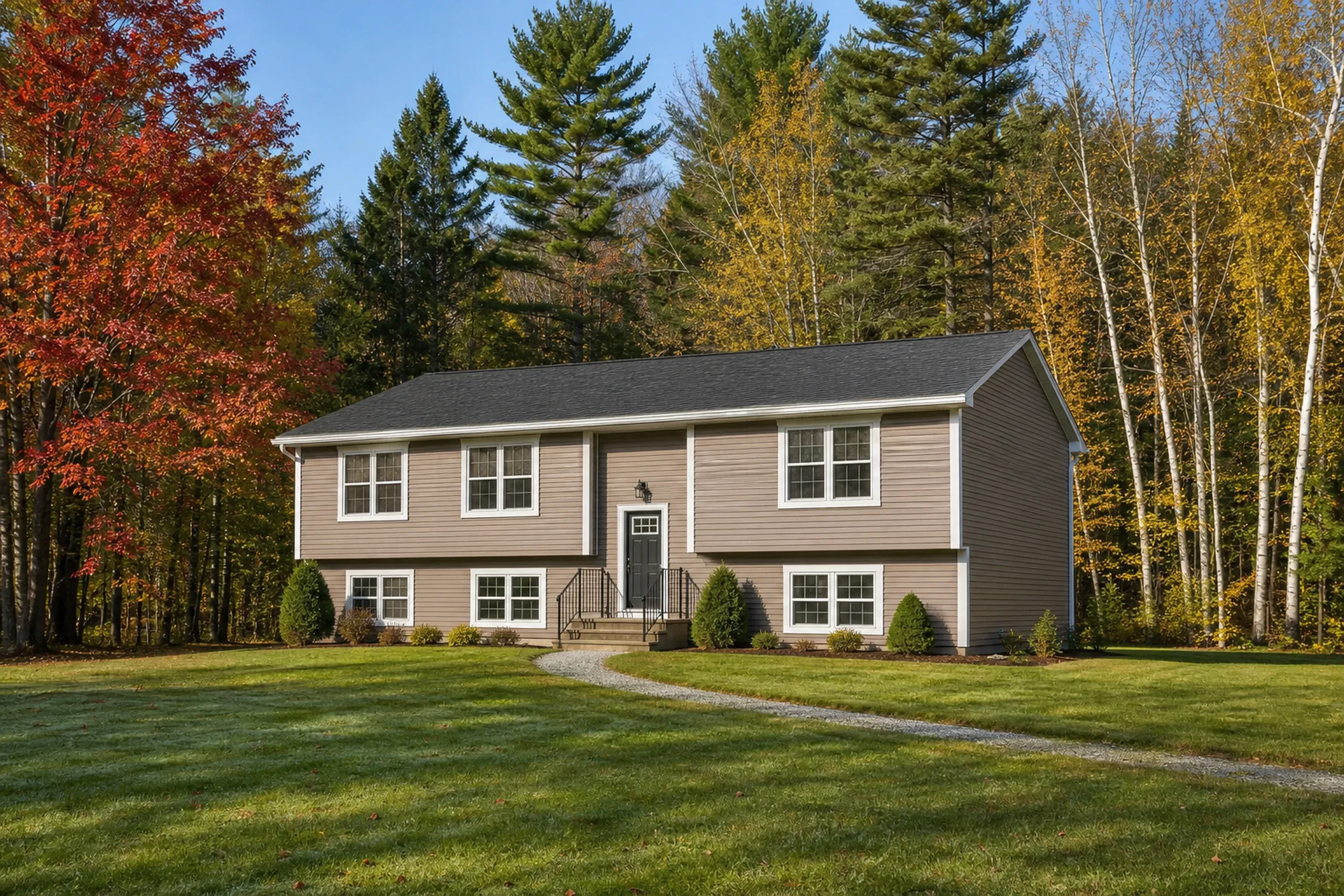
How We Hang Vinyl for Freeze-Thaw and Lake Wind
The Vinyl Siding Institute is blunt that vinyl is cladding, not a water-resistive barrier: it sheds most of the rain, and the layer behind it handles the rest. So every stripped wall gets new housewrap lapped over the flashing at each window, door and penetration, the way the Department of Energy's drainage plane guide lays it out.
Inland, snow banks against the lowest courses for weeks, and wind-driven rain across an open hayfield or a lake hits one face of a house far harder than the other three.
Kick-out flashing goes in wherever a roof line ends against a sidewall; the VSI installation manual points out that some cold-climate localities require it. Fasteners are aluminum, galvanized steel or another corrosion-resistant metal, as VSI specifies.
Cold installs get VSI's wider 3/8 inch clearance at openings below 40 degrees F, and a slow saw so the panel does not chip.
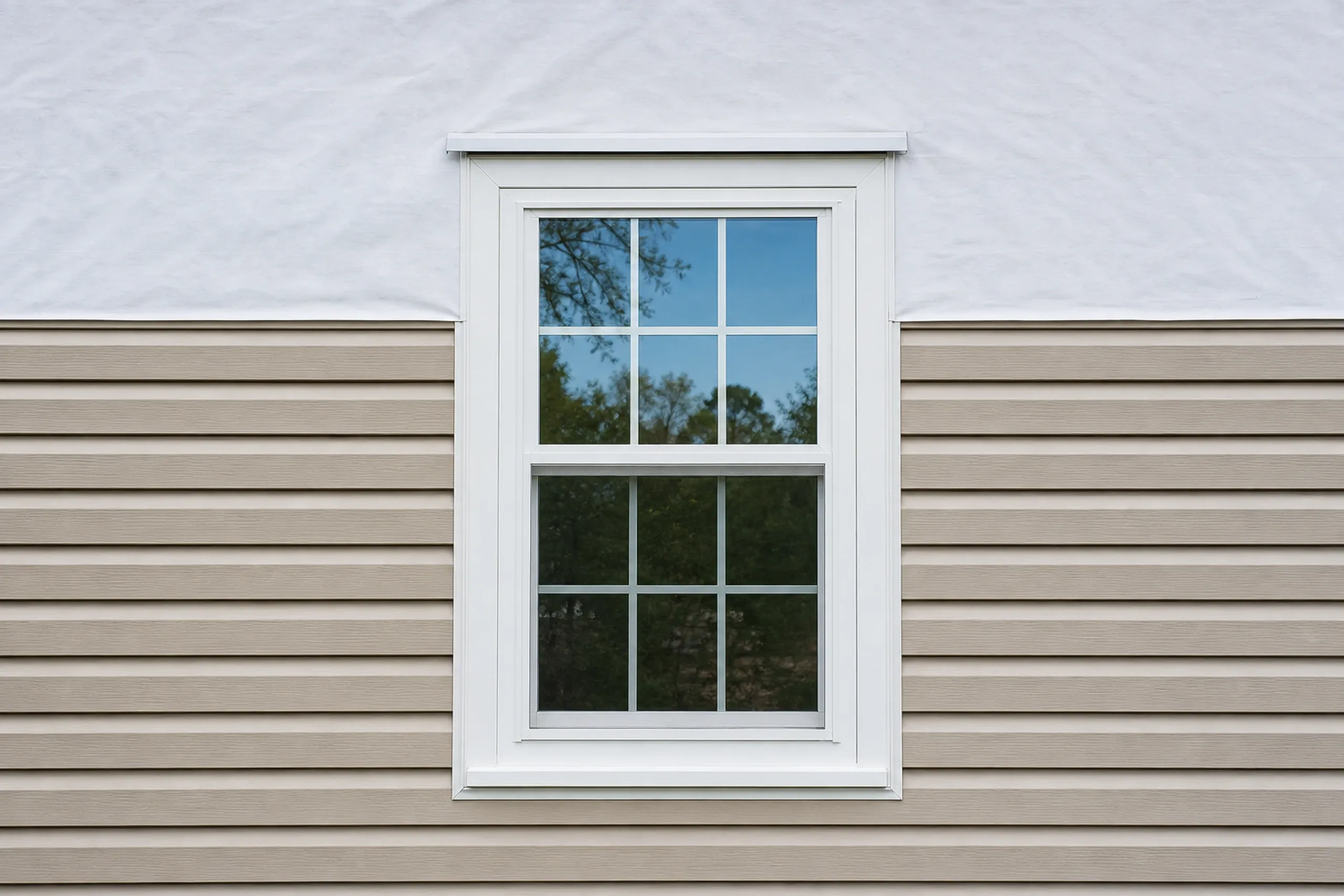
Choosing Between Vinyl and the Board Sidings
Our position is plain: on a house with ordinary exposure and a budget that matters, vinyl hung correctly is the right siding. LP SmartSide averages $1,200 to $1,500 per square here and James Hardie fiber cement $1,300 to $1,600, against $800 to $1,000 for vinyl.
Board siding earns its extra cost when the house calls for a painted wood look, or when one wall takes the full weather off open ground. On a plain cape, the money saved by choosing vinyl usually does more good spent on sheathing and flashing.
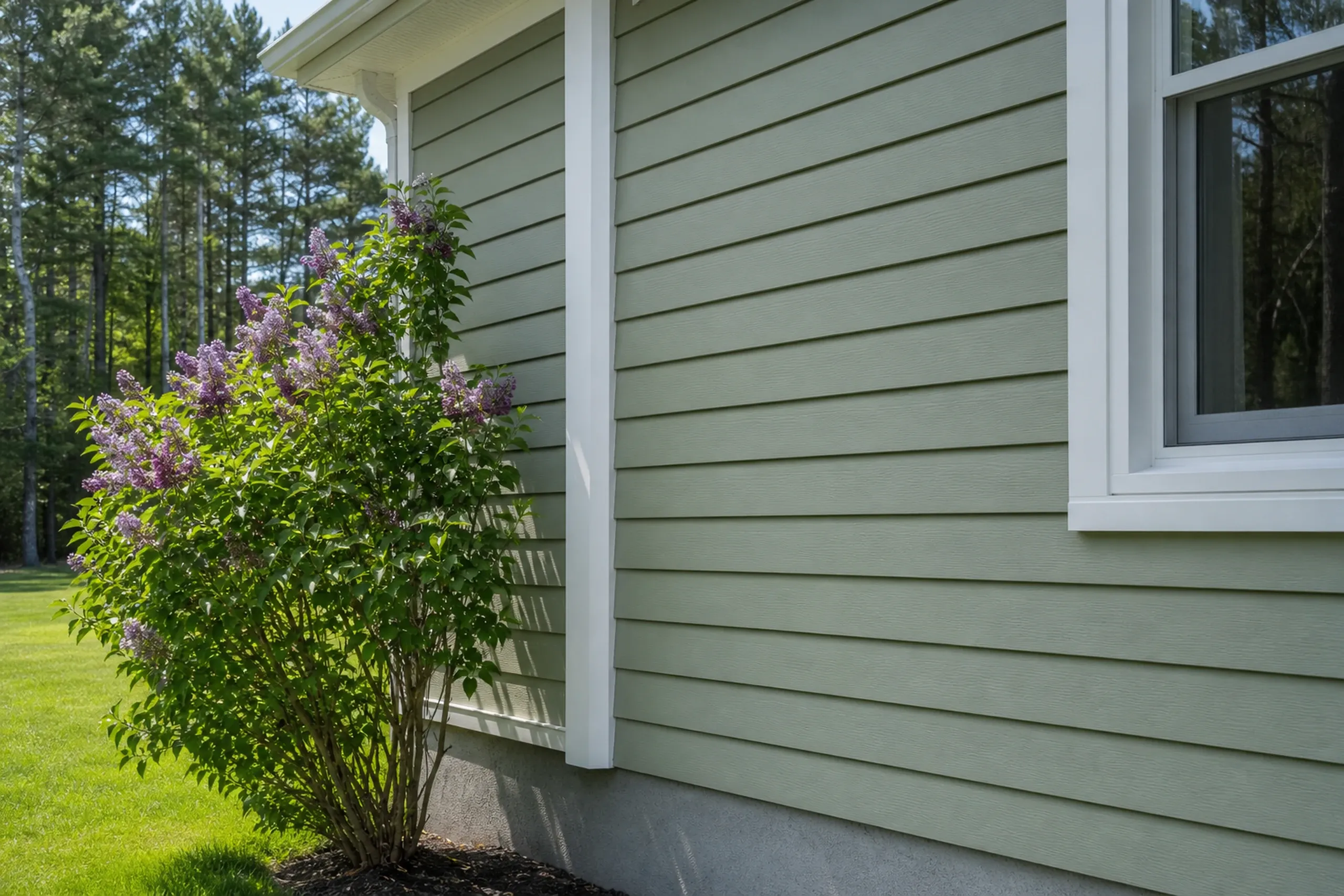
What Vinyl Siding Services Do We Offer?
A vinyl re-side with us starts at the sheathing and ends at the trim.
Some walls are better left covered. On a house built before 1978, the EPA's Renovation, Repair and Painting rule governs how painted siding is disturbed, and old cement-asbestos shingles are a sound reason to hang new vinyl over the existing layer instead.
- Tear-off and haul-away of old vinyl, aluminum or wood siding, with soft sheathing replaced before anything new goes up
- New housewrap and flashed openings, then the starter strip, corner posts and J-channel that hold the panels true
- Your choice of standard or insulated panels, plus soffit, fascia, gable trim and window and door casings
How Do We Take a House From Old Vinyl to New?
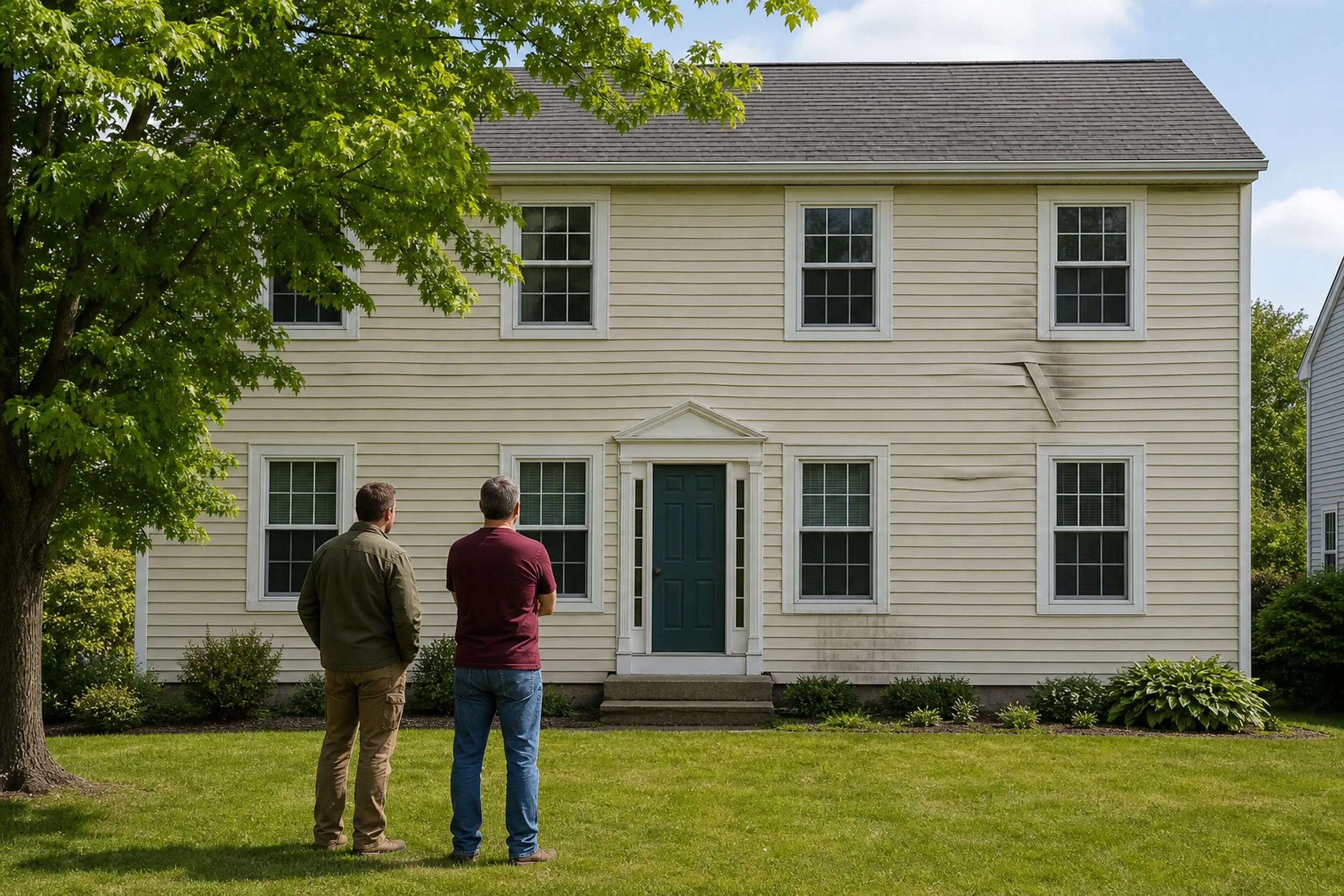
The walls come first, the number second.
We press on sills, corners and window heads, look for streaks under roof edges, and tell you what the old siding is likely hiding before any of it comes off.
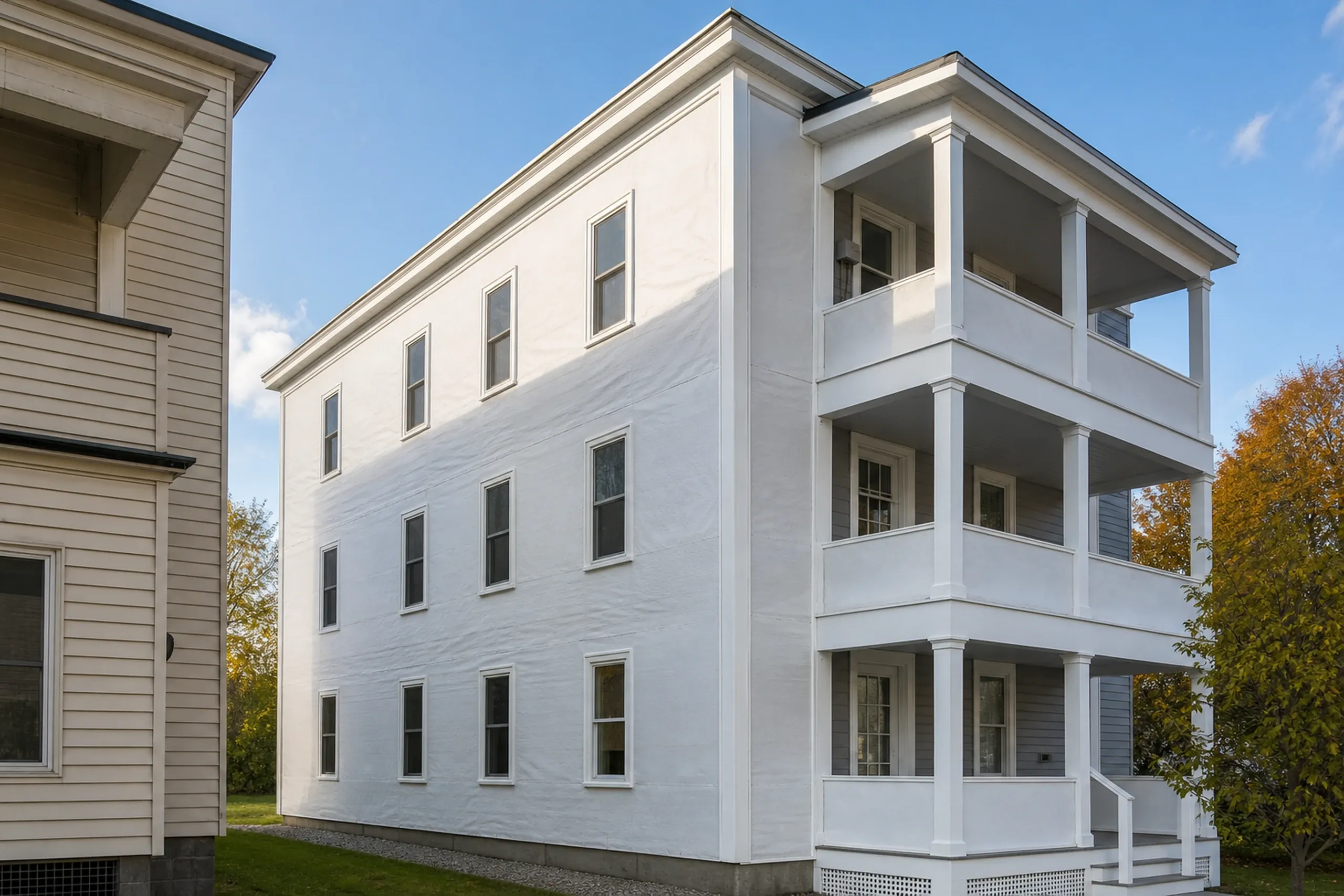
Price on paper, signature before work.
Maine's home construction contract law means any job past $3,000 needs a signed, written contract, with no more than a third of the price paid up front. Where the town wants a permit for the re-side, we pull it, though approval stays the town's call.
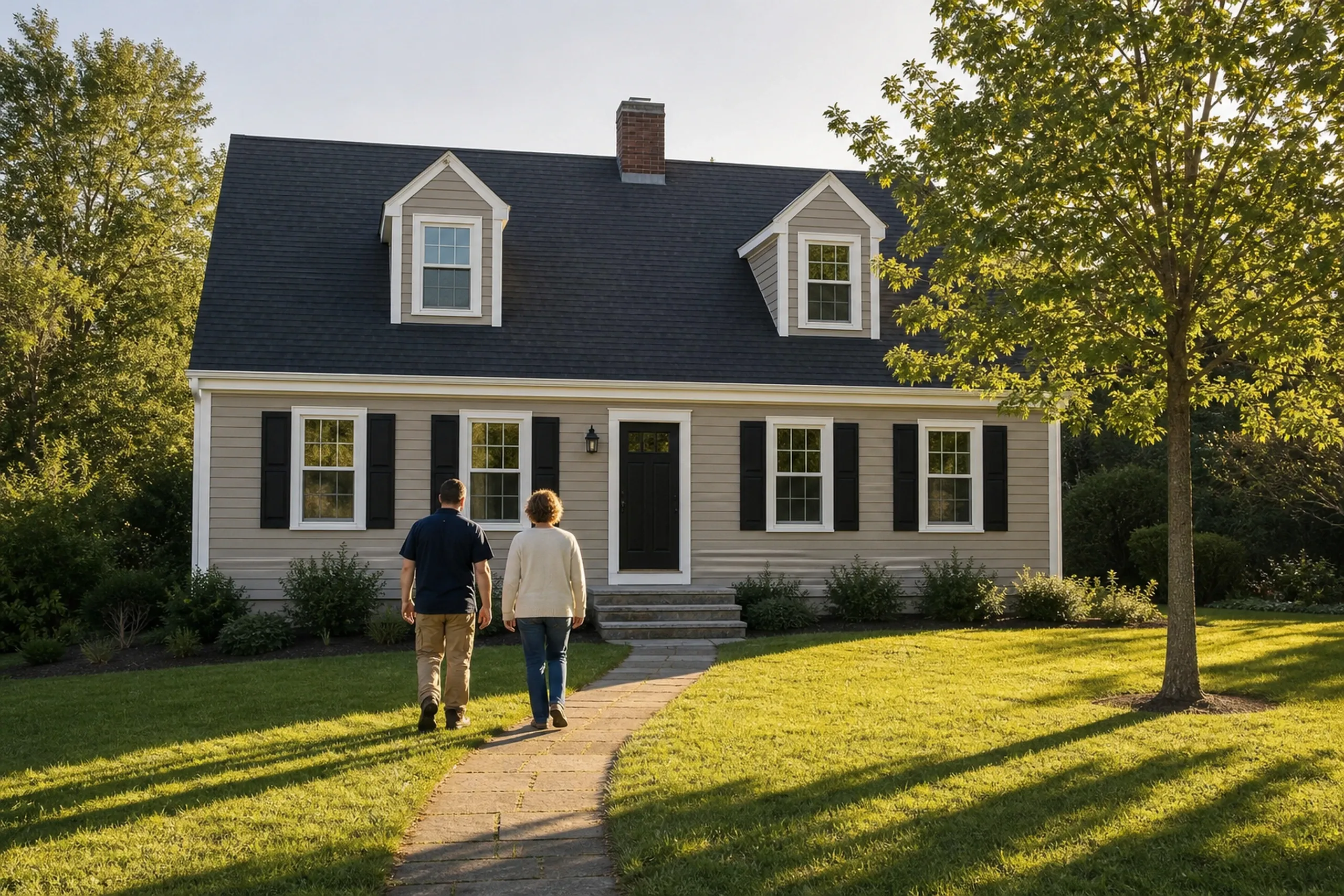
Side by side, then a walk around the house.
We finish one side completely, trim included, before stripping the next, which keeps the rest of the house closed while one wall is open. When the last wall is done we walk the whole house with you, and the old siding leaves with us.
Which Houses Should Get Vinyl Siding Replacement?
Vinyl siding replacement belongs on most capes, ranches, duplexes and mill-era multi-families in the Lewiston-Auburn area, where a dry wall at a fair price per square is the goal. On a few houses it is the wrong choice, and we say so at the first visit.
Vinyl never goes over rot: the VSI manual says loose boards get nailed down, rotten ones get replaced, and uneven walls get furred or stripped before a panel goes on. A Victorian with deep trim, or a camp built for cedar, looks better in cedar shingles or a painted board.
Martin Holladay of Green Building Advisor warns that each added layer thickens the wall and causes trim trouble at windows and doors, so a house already wearing two layers gets stripped. Three cracked panels by the back door, on the other hand, call for siding repair.
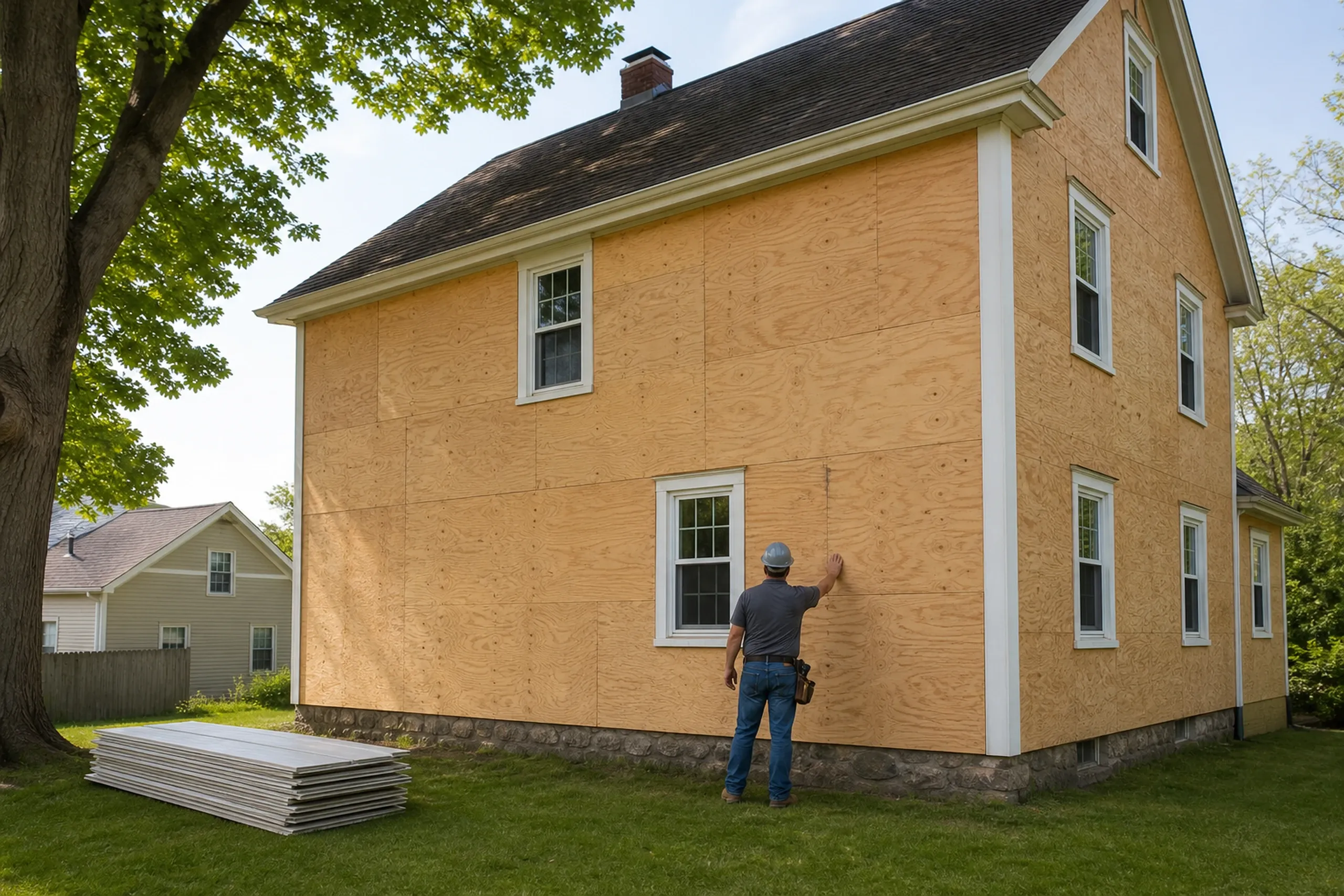
Who Benefits From New Vinyl, Where and When?
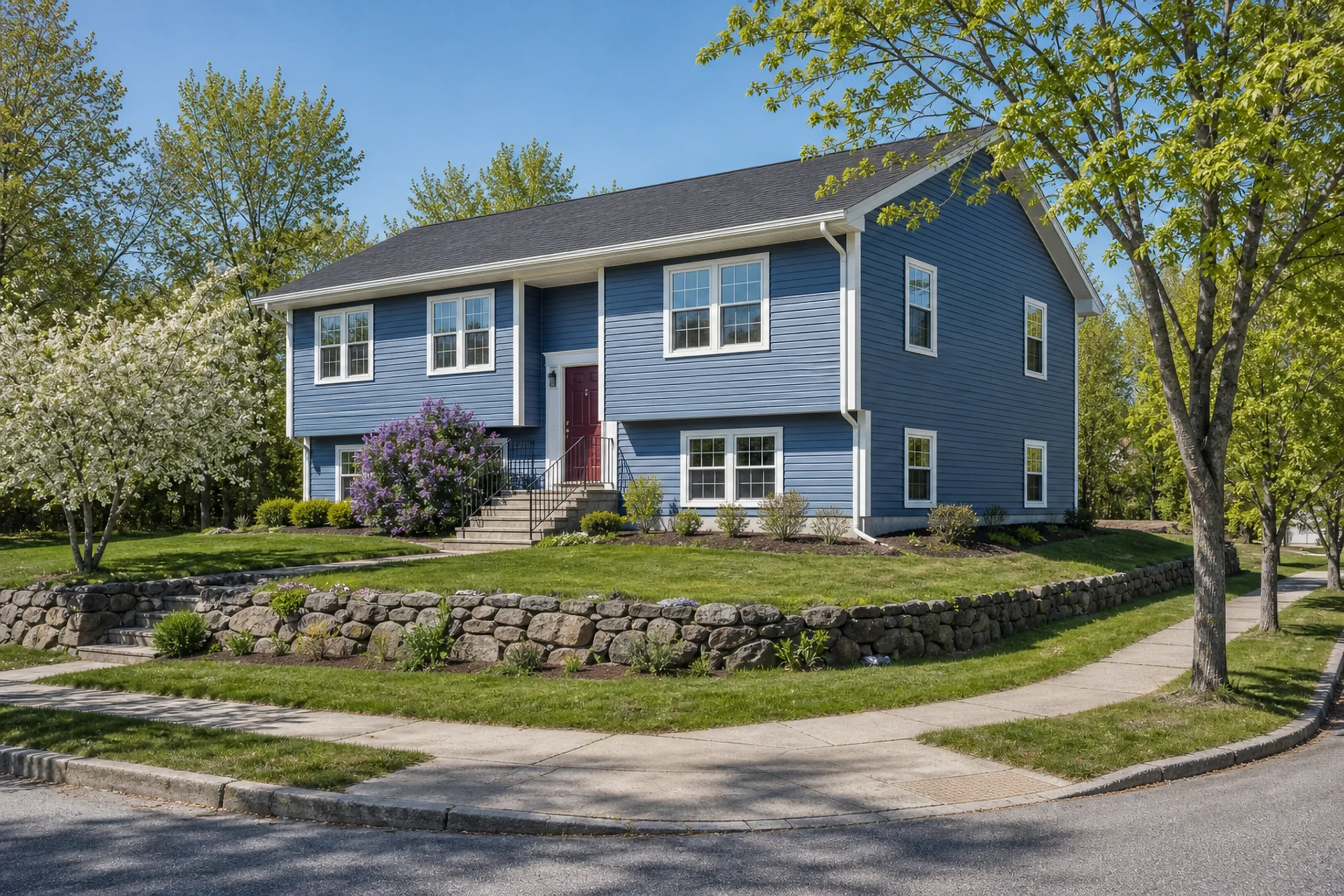
Who benefits most from new vinyl siding?
The owners who benefit most from new vinyl siding have panels that are cracked, chalky or loose, or tired aluminum and wood on a house where cost per square drives the decision. Landlords with a two-family or a triple-decker fall squarely in that group.
Which wall should a vinyl job start on?
A vinyl job should start on the wall that takes the worst weather, often the face toward open ground or the prevailing wind. New panels look brighter than faded ones beside them, so the street-facing sides are best done as a set.
What season suits a vinyl re-side best?
Late spring into fall suits a vinyl re-side best, when panels cut clean and a stripped wall can dry before its wrap goes on. We would rather not open a wall in January.
How Much Is New Vinyl Siding by the Square?
New vinyl siding averages $800 to $1,000 by the square (100 square feet of wall) in the Lewiston-Auburn area, a figure that already counts tear-off, housewrap, flashing, trim and haul-away. Treat it as a number that qualifies a budget rather than prices a job: it averages many quotes, and your walls may come in below or above it.
| House size | Vinyl, installed |
|---|---|
| Small20 to 25 squares | $16,000 to $25,000 |
| Medium25 to 32 squares | $20,000 to $32,000 |
| Large32+ squares | from $25,500 |
Drawn from many vinyl quotes in this area and never a bid on your house; rot, absent flashing or framing damage found at tear-off can push a job beyond its row.
Besides the panel, what pushes a vinyl price up?
Besides the panel, a vinyl price climbs most when the tear-off finds trouble: sheathing gone soft, sills rotted through, or a window that never had head flashing. Then comes height (a triple-decker's third-floor gable needs staging a ranch never does) and the count of windows, corners and trim runs.
Can new vinyl go right over the old siding?
New vinyl can go right over the old siding when the existing layer is flat, sound and dry, and it is the usual choice over cement-asbestos shingle or lead-painted clapboard that is safer left in place. It saves tear-off and disposal, but soft or stained sections still get opened, since VSI says vinyl must never cover rotting wood.
Should you consider insulated vinyl?
You should consider insulated vinyl on any wall being stripped anyway: VSI describes it as vinyl with rigid foam bonded to each panel and rates it at a minimum R-2.0 as continuous insulation. Both options can sit side by side on your written quote.
Where Do You Start on a Vinyl Re-Side?
You start a vinyl re-side with a free estimate request: we set a time to look at your walls, press on the soft spots and put the cost per square on paper. Until you sign, nothing is owed and no work is scheduled.