
Reliable Siding Repair | Siding Replacement Lewiston
Siding repair should end the leak and not just the eyesore, so we find how water reached the wall before a single piece comes out. Then we fix the wrap and sheathing behind the damage and set new vinyl, clapboard, shingle or board siding that blends with the wall around it.
- (207) 515-8586
- 217 Main St, 2nd Floor, Lewiston
- [email protected]
- Siding only, start to finish
- Free estimate requests
- 22 towns around Lewiston-Auburn
- Cause found before anything is cut
- Patch blended into the old wall
- A written price after we look
This page covers siding repair for homes in the Lewiston-Auburn area: fixing cracked or loose vinyl, split clapboards, curled cedar shingles and damaged board siding, along with the housewrap, flashing and sheathing behind the damage.
A repair is the right fix when one event or one leak did the harm and the rest of the wall is sound. Siding Replacement Lewiston traces the water path before cutting anything out, so the new pieces answer the cause instead of hiding a stain.
What to remember: there is no repair price list on this site. Every repair is priced from a visit, by the number of pieces, the height of the wall and what the sheathing behind it shows.
Why Do So Many Siding Patches Leak Again?
So many siding patches leak again because whoever patched the wall replaced what showed and never traced where the water came from. An ice-dammed roof edge, an unflashed window head or a spilling gutter will soak the new piece just as fast.
- The leak traced to its source before any cutting, including roof-to-wall joints missing a kick-out
- Every board of sheathing behind the damage checked with a probe, and the soft ones replaced
- Replacement pieces chosen to match the old wall's shape, spacing and color, so the patch reads as part of it
What if one patch will not be enough?
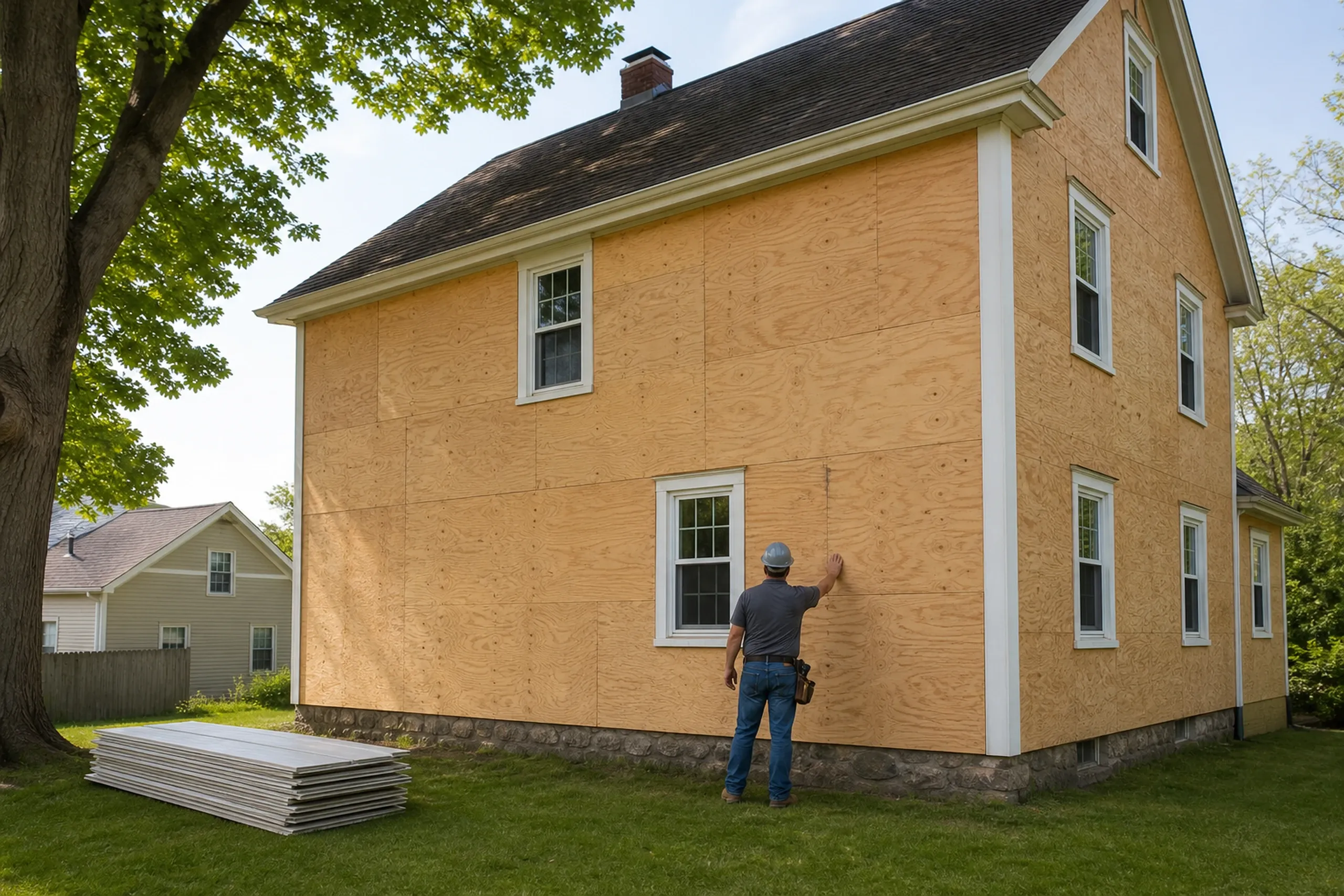 Vinyl Siding ReplacementThe re-side most Maine houses get, priced by the square.See Vinyl Siding Replacement
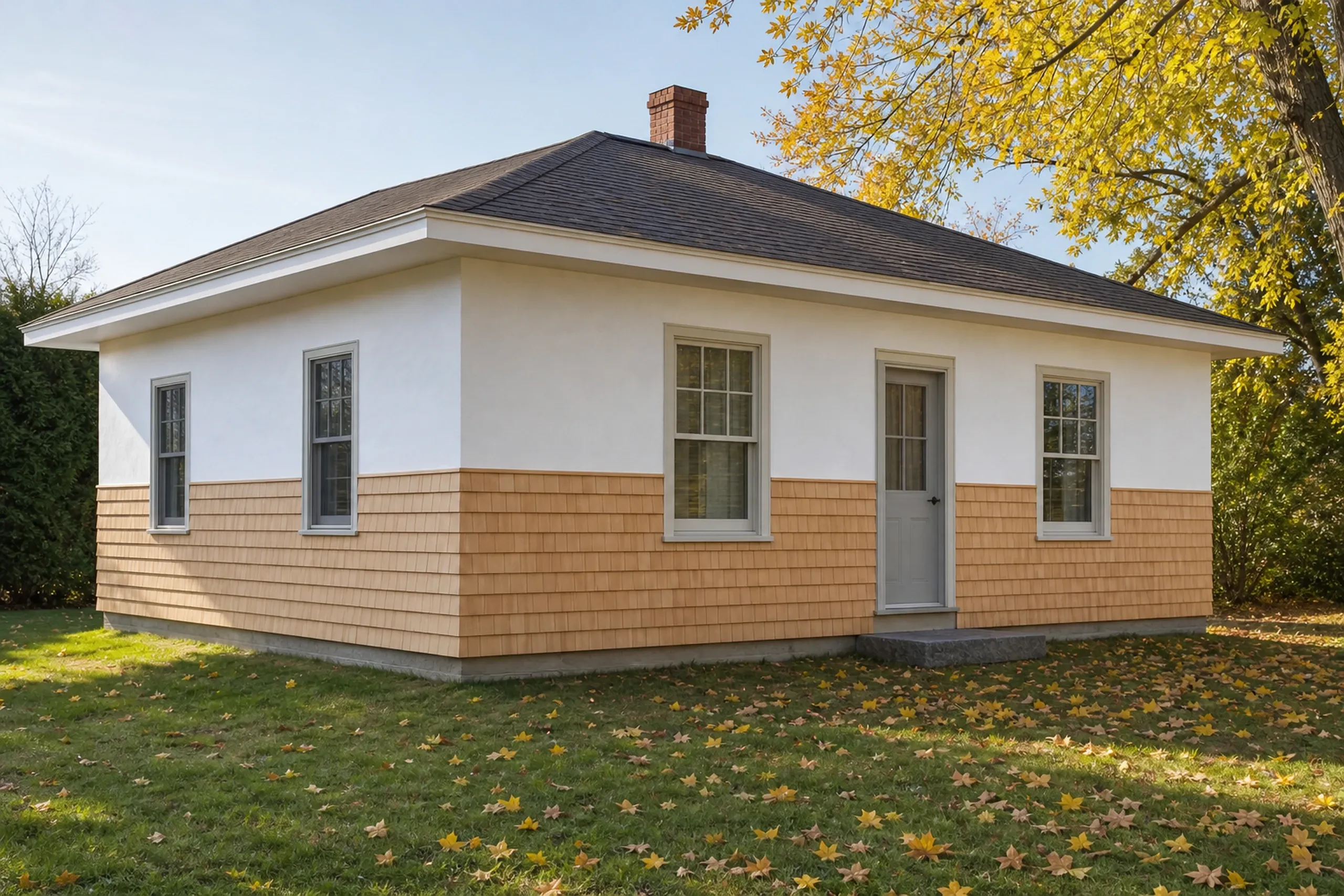 Cedar Shingle SidingThe shingled wall Maine is known for, laid course by course.See Cedar Shingle Siding
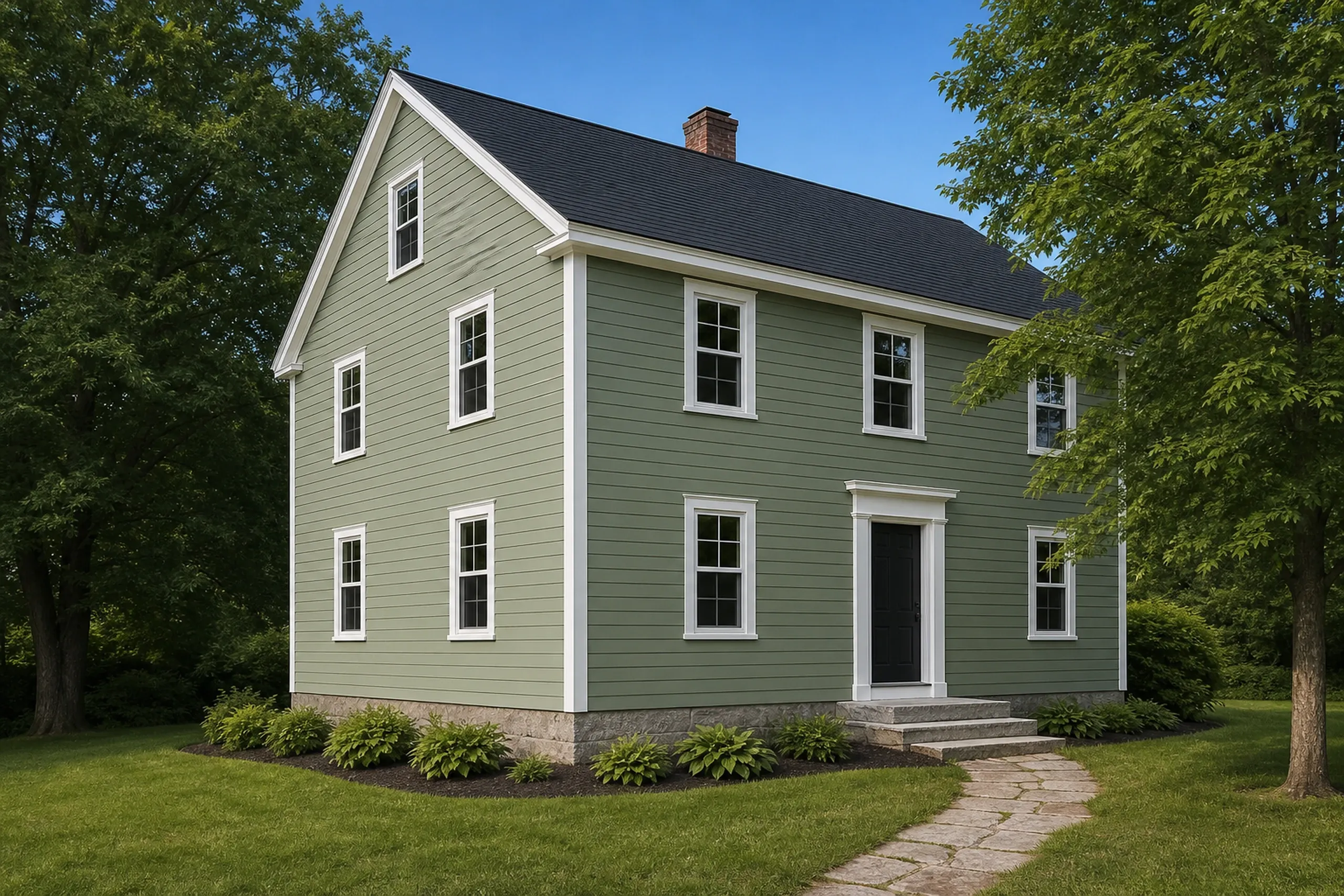 LP SidingEngineered wood boards that arrive primed and take paint like wood.See LP Siding
Where do we take on siding repair?
- AuburnME1 mi from Lewiston
- MinotME5 mi from Lewiston
- SabattusME5 mi from Lewiston
- GreeneME7 mi from Lewiston
- Mechanic FallsME9 mi from Lewiston
- PolandME9 mi from Lewiston
- WalesME9 mi from Lewiston
- DurhamME10 mi from Lewiston
- New GloucesterME10 mi from Lewiston
- LisbonME10 mi from Lewiston
- TurnerME11 mi from Lewiston
- HebronME12 mi from Lewiston
- BowdoinME13 mi from Lewiston
- MonmouthME13 mi from Lewiston
- LitchfieldME14 mi from Lewiston
- OxfordME14 mi from Lewiston
- PownalME14 mi from Lewiston
- LeedsME15 mi from Lewiston
- BuckfieldME15 mi from Lewiston
- OtisfieldME16 mi from Lewiston
- CascoME17 mi from Lewiston
What Siding Repairs Come Up Most on Older Houses?
Most siding repairs on older houses around here fit one of three patterns, each starting in a different place.
Storm-Cracked or Loose Vinyl Panels
Vinyl is the most forgiving siding to repair, because each course locks into the one beneath it. In the procedure the Vinyl Siding Institute's installation manual lays out, a zip lock tool unhooks the course above, the broken panel's nails come out, and a new panel locks in before the upper course is zipped back over it.
A split corner post can often stay on the wall. Per VSI, the crew cuts off the cracked face, keeps the nailed hem and pocket, and snaps a replacement corner over them.
Color is the catch. Family Handyman points out that sun fades vinyl over the years, and that finding an older style and color can be a challenge.
Split Clapboards, Curled Shingles and Board Damage
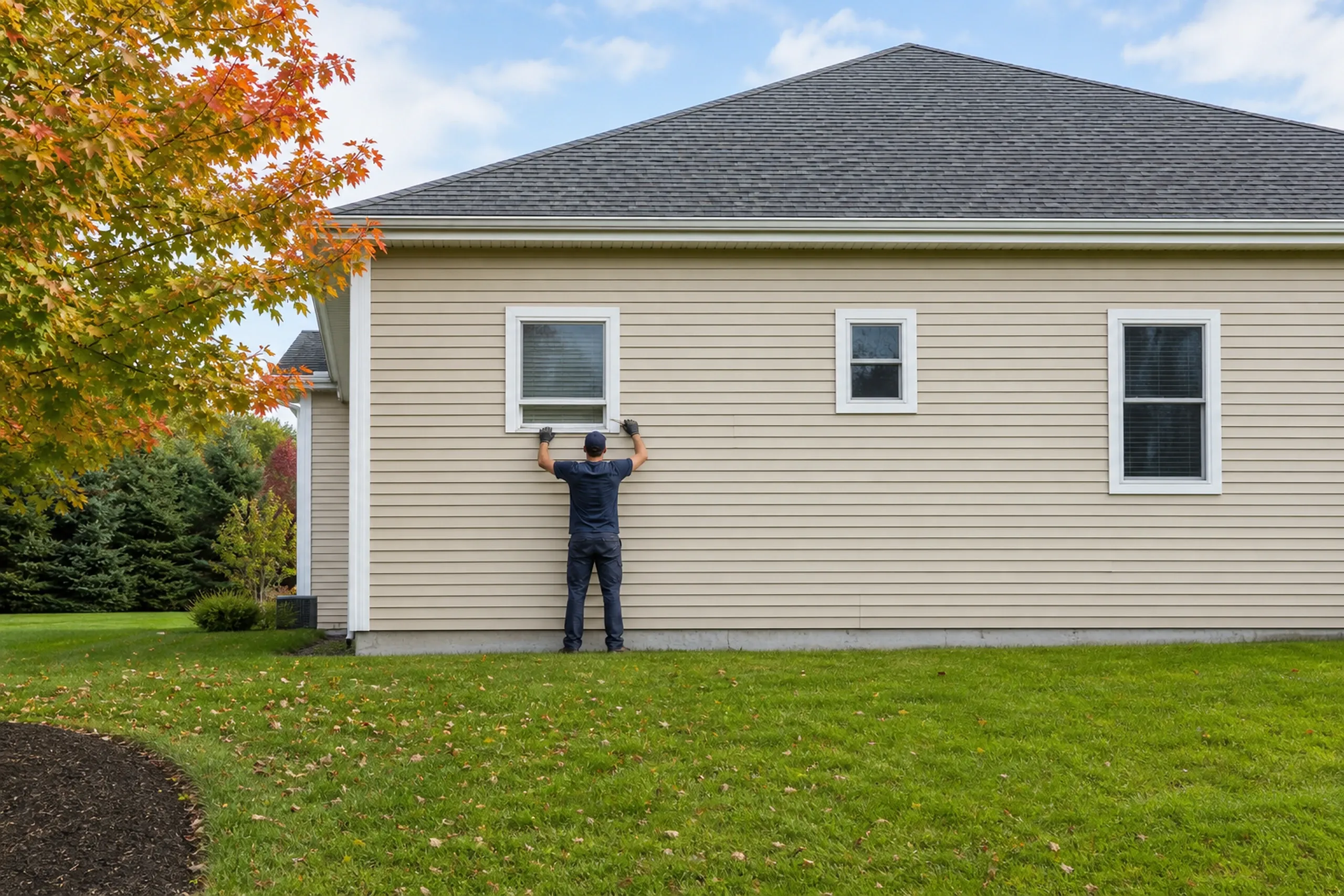
A split wood clapboard seldom means replacing the whole length. Fine Homebuilding's Andy Engel replaces only the run from the damage to the closest end joint, fastens the new piece along one edge so it can move, and primes all six sides.
This Old House's rule for shingled walls: pull any shingle that is soft or crumbling, and leave roughly 1/8 inch between the new ones so they can swell. Once curled and soft shingles cover most of a side, re-laying it in new cedar shingle siding over fresh wrap is a better use of the money than piecemeal swaps.
Fiber cement and engineered wood take different care. James Hardie lists a cementitious patching compound for small chips and dents in its boards, while LP's own FAQ says every exposed cut on LP SmartSide gets sealed with paint or caulk and warns against leaning on a field-sprayed coating.
Leaks at Eaves, Roof Joints and Window Heads
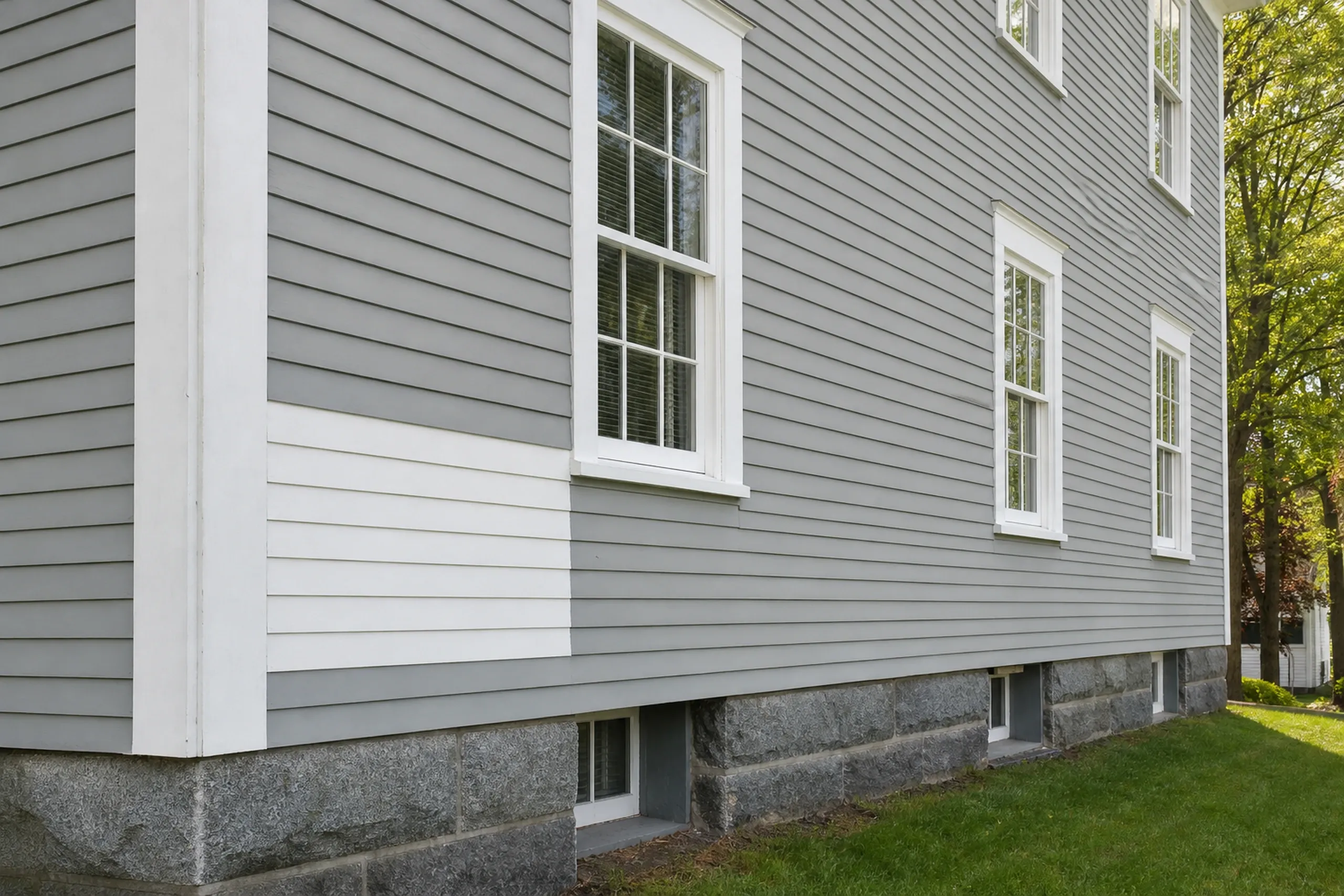
When paint peels or the wall goes soft below a roof line, the siding is usually the victim, not the cause. According to Building Science Corporation, an ice dam builds when snow melts on a roof warmed from below and refreezes at the colder overhang, and its leaks can reach the sheathing and walls underneath.
At a lower roof that runs into a sidewall, a kick-out flashing usually belongs in the repair, so runoff lands in the gutter instead of behind the siding. Siding butted hard against a sloped roof is a frequent casualty, according to This Old House's Tom Silva, who prefers to hold it back 2 inches.
Under a window, look up first: Mike Guertin of Fine Homebuilding says a J-channel leg across the top of an opening cannot be counted on as head flashing, so we check the head before touching the stained siding.
What Siding Repair Services Do We Offer?
Our repairs cover the siding you see and the layers behind it.
Plenty of houses here went up long before 1978, and on those the EPA's Renovation, Repair and Painting rule governs how painted siding and trim may be disturbed. We ask what year the house was built before we open any painted wall.
- Matched repairs in every common siding here: vinyl and its corner posts, wood clapboard, cedar shingle, fiber cement and engineered wood
- Leak hunting at eaves, openings and gutters, followed by new sheathing and trim wherever rot has set in
- Storm damage, failed caulk and sealant, and the paint, stain or touch-up that blends a patched section into its wall
What Are the Steps of a Siding Repair?
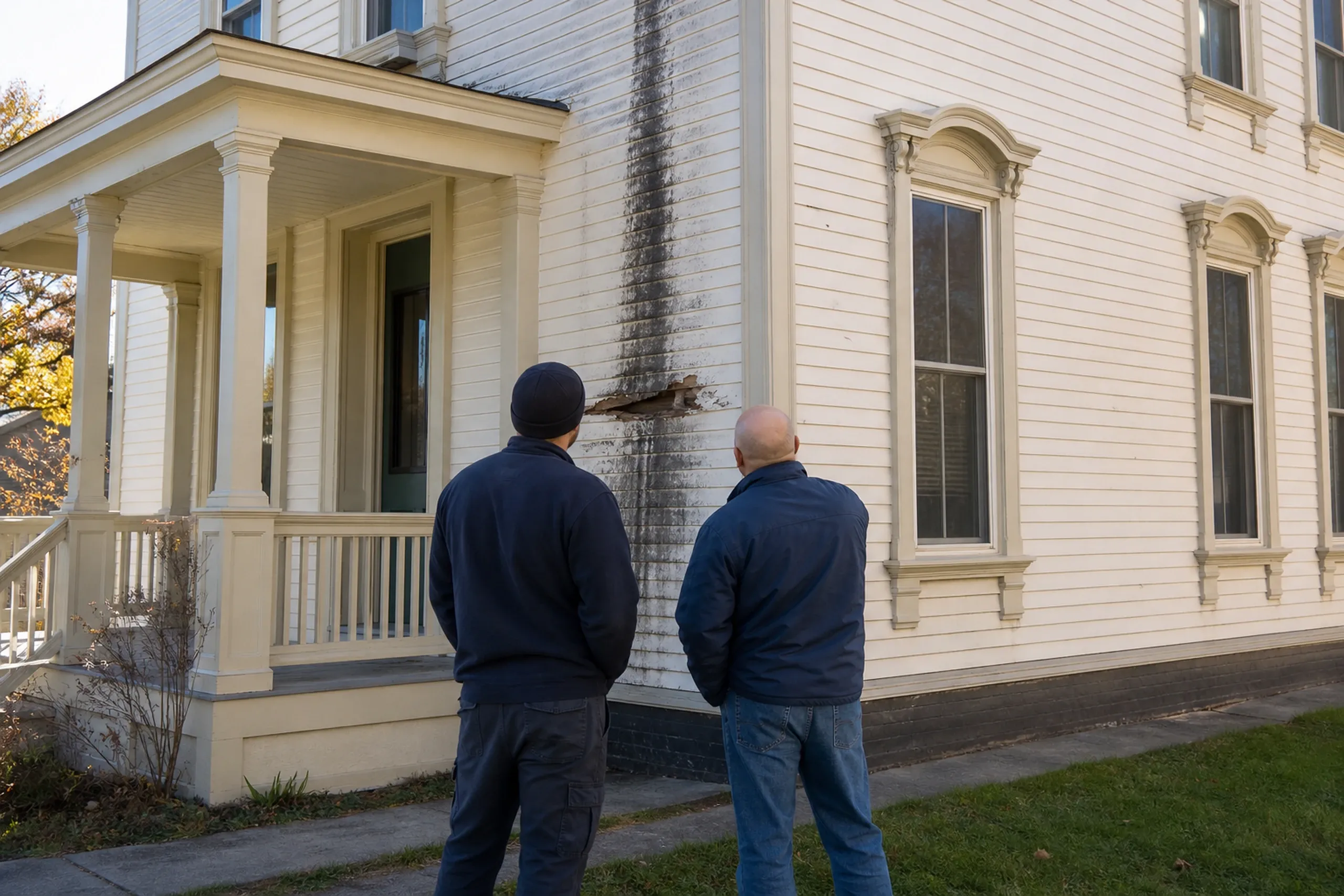
Cause first, price second.
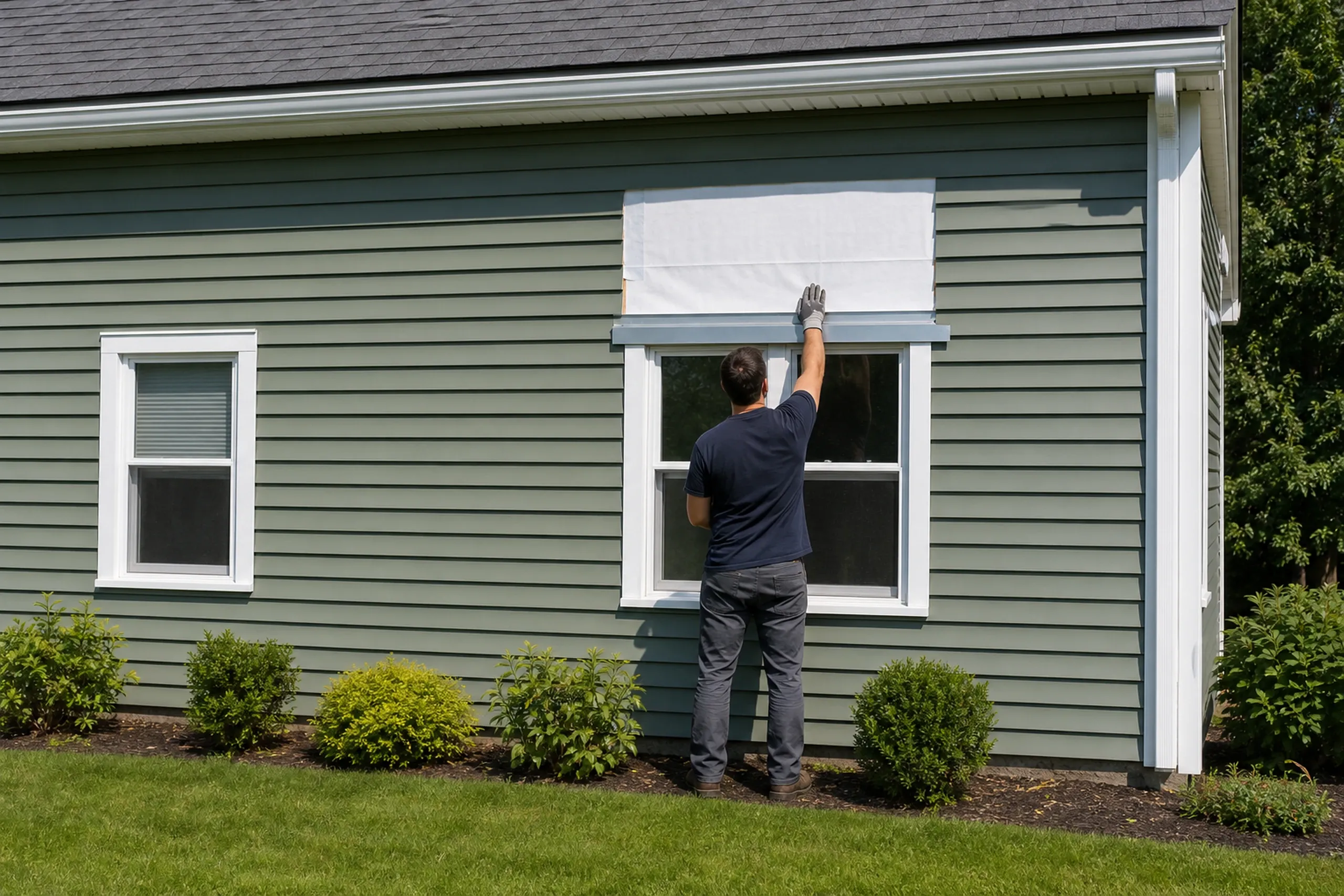
The damage gets a look, and so does whatever sits above it (an eave, a gutter, a window head); with your permission we lift a piece to see the sheathing underneath.
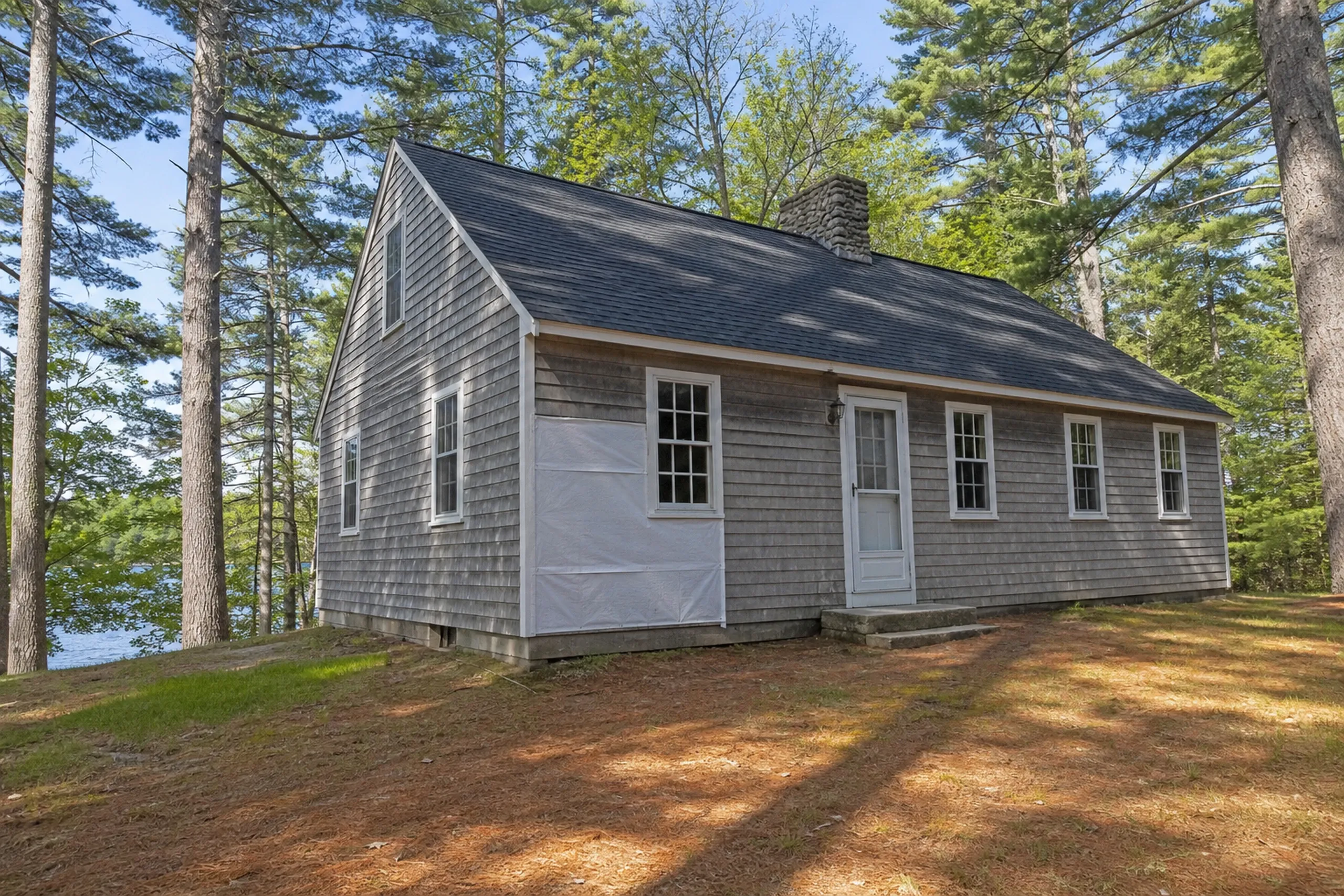
Every piece listed, then signed.
You get a written price listing each piece and each layer coming out, and you sign before we start. For larger repairs, Maine's home construction contract statute makes that signature a legal requirement and limits the deposit to a third of the price.
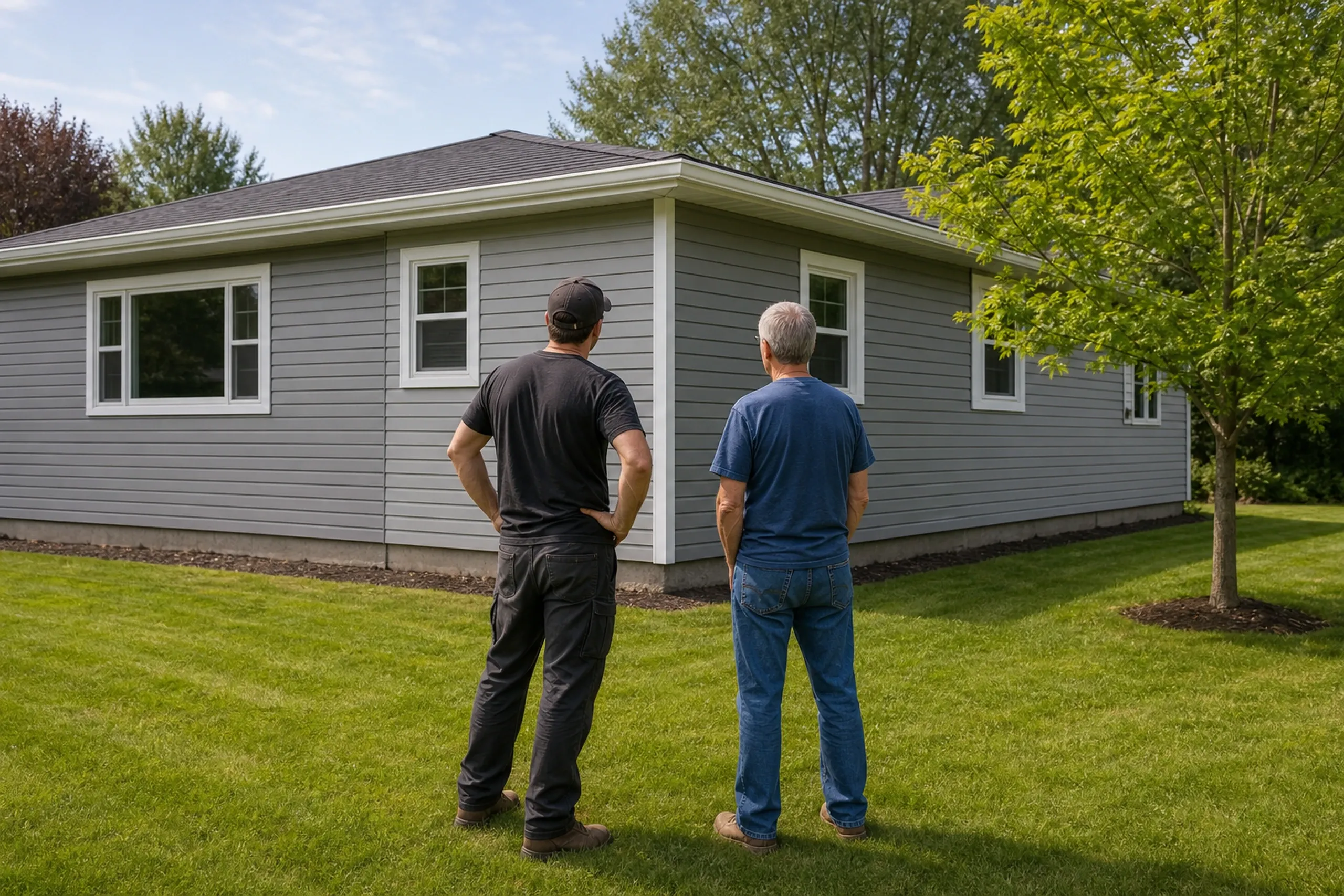
Layers first, siding last, then a walkaround.
Sheathing, wrap and flashing go back before any new siding does. Once the patch is painted or stained, we look it over together from the yard and up close.
Should You Choose Siding Repair or a Full Re-Side?
Choose siding repair when a single cause did the damage, like one storm, one dropped limb or one leaking eave, and the rest of the wall is still solid. The siding also has to be matchable, or the patch will stand out for as long as the house stands.
Choose a full re-side when the damage repeats itself around the house: soft wood on two or three walls, faded panels cracking on every side, or a whole face of curled shingles. We will tell you so at the first visit and point you to vinyl siding replacement, or new siding in the original material, instead of a string of patches.
Rot found partway through changes the job, and you hear about it from us before the scope grows. If the sheathing is soft past the damaged section, we show you the boards, write up the added work and wait for your yes.
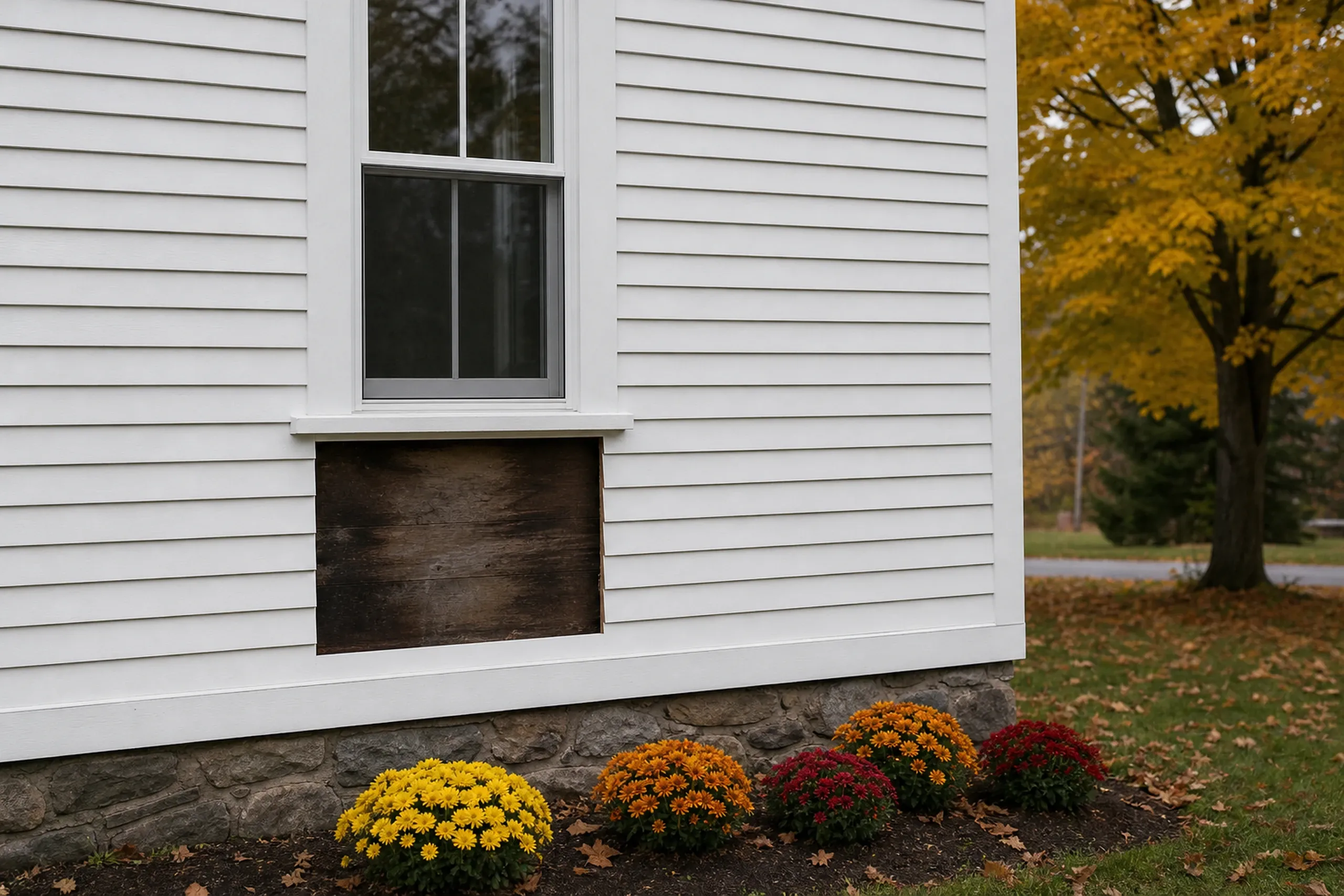
When, Where and for Whom Does Repair Make Sense?
Which homeowners need a repair visit?
Homeowners need a repair visit when they find a cracked, loose or missing piece, a spot that gives under a thumb, or a stain running down from a roof edge or window. This Old House adds curled edges and dark, green or black spots to the warning signs on a shingled wall.
Where on a house does siding trouble tend to show first?
Siding trouble tends to show first along the bottom courses, where snow sits against the wall for weeks, and under roof edges and window heads, where meltwater and rain run down. Spilling gutter ends are the other usual suspect.
How soon should a damaged section be fixed?
A damaged section should be fixed in the same season it appears, before a winter of freeze-thaw and meltwater works into the sheathing behind it. Vinyl swaps go best on a day above freezing, while clapboard, shingle and board repairs can go ahead in most months.
How Much Does Siding Repair Cost?
A siding repair is priced from a visit rather than a list, because two damaged corners that look the same from the driveway can hide very different walls. Three things set the size of the job:
- The size and height of the damage: three panels at eye level take far less time and staging than a gable end two stories up
- The condition behind it: dry, firm sheathing keeps a repair small, while rot or missing flashing adds a layer of work
- The match: a discontinued color or a weathered cedar wall takes longer to blend, and sometimes re-siding one full wall costs less than piecing it in
Why is a repair priced only after a visit?
A repair is priced only after a visit because the damage you see is usually the smallest part of the job, and the wall behind it decides the rest. We would rather write a real figure at your wall than post one that fits somebody else's house.
When does re-siding one wall beat patching it?
Re-siding one wall beats patching it when the repair would need parts in several spots across that face, or when no new piece will ever match the weathered ones around it. On those walls we price both options side by side.
Will the repaired section match the rest of the house?
A repaired section blends most easily on a painted wall, because one coat can cover old and new boards alike. Faded vinyl and weathered cedar are harder: new shingles start lighter and need time to turn the silver-gray of the wall around them, and an older vinyl color may no longer be made.
How Do You Book a Siding Repair Visit?
You book a siding repair visit by sending a free estimate request, and we come to your wall to find the cause before anything is priced. Your written price comes after that visit, and the work waits on your signature.